
SEA TURTLE PROGRAM
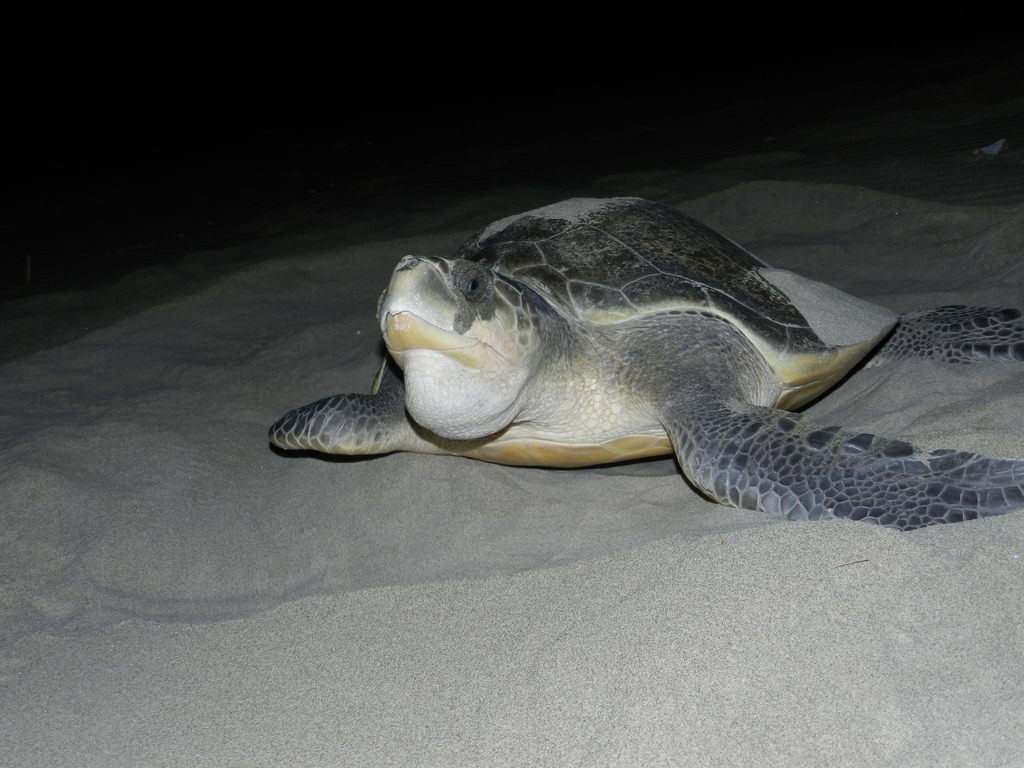
SEA TURTLE PROGRAM
What we did in 2019–2022 seasons
INTRODUCTION
The coastline of Bangladesh, a sweeping 710-kilometer frontier where land meets the Bay of Bengal, has supported sea turtles for centuries. Here, Olive Ridley and Green Turtles have traveled thousands of kilometers across the Indian Ocean only to return to these beaches, repeating an ancient ritual of nesting and hatchling release. Yet the modern coastal environment is no longer the quiet refuge it once was. Over the last four decades, human pressure has increased dramatically—driven by unplanned tourism in Cox’s Bazar and St. Martin’s Island, expansion of trawling fleets, coastal industrialization, artificial lighting, beach traffic, and rapid habitat modification. These changes have threatened the survival of marine turtles across Bangladesh’s waters, pushing populations into sharp decline.
In this urgent conservation context, MarineLife Alliance (MLA) launched and expanded a large-scale, community-powered sea turtle conservation program between 2019 and 2022. This program carried out in close collaboration with the Bangladesh Forest Department, has grown into the most comprehensive sea turtle protection effort in the country. Over these three years, MLA implemented systematic monitoring across a 200-kilometer stretch of coastline, safeguarded more than 1,681 nests, and released 128,125 hatchlings. The program also documented 348 dead turtles washed ashore, trained 341 fishers in safe release techniques, completed more than 1,600 kilometers of offshore survey, restored native dune vegetation, established six monitoring stations, and reached thousands of community members and students through targeted awareness and education work.
This descriptive report tells the full story of these achievements. Beyond listing numbers, it narrates how MLA’s work has evolved into a lifeline for Bangladesh’s sea turtles, weaving together science, community stewardship, cultural knowledge, and the resilience of coastal ecosystems.
THE COASTAL LANDSCAPE AND WHY IT MATTERS
Bangladesh’s coastline is a mosaic of extraordinary diversity. The south-eastern coastal belt—from Teknaf Peninsula to St. Martin’s Island—features long sandy beaches, coral patches, rocky outcrops, shallow lagoons, and dune vegetation. These habitats are vital for sea turtles, providing nesting grounds, foraging zones for juveniles, resting areas, and developmental habitats. The south-central coast, stretching through Dhalghata, Laldia, Maheshkhali, Kutubdia, and Matarbari, adds another 60 kilometers of sandy beaches, many of them lightly populated and historically important for nesting. Further west, sites such as Kuakata, Char Kukri Mukri, Sonar Char, and the remote islands of the Sundarbans—Putney, Egg Island, Katka-Jamtola, Nilkamal, and Dublar Char—provide critical nesting locations and rich foraging grounds.
Over the three-year period, MLA teams surveyed and monitored nearly 400 kilometers of nesting-suitable coastline across these regions. The program documented ecological differences between sites: the coral rubble of St. Martin’s serves as a nursery ground for juvenile Hawksbills, while the seagrass-rich lagoons near Sonadia offer feeding habitats for Green Turtles. Meanwhile, the long uninterrupted beaches of the Teknaf Peninsula remain the strongest nesting region for Olive Ridleys, even as tourism, beach lighting, and erosion threaten their survival. This diversity of coastal habitats reflects why a broad, integrated conservation program is essential for protecting sea turtles in Bangladesh.
A CONTINUOUS MONITORING NETWORK
Nesting occurs in the quiet hours of the night, often during rising tides when the beach is steep and soft enough for nest excavation. Understanding these cycles requires continuous monitoring, and from 2019 to 2022, MLA developed a robust network of trained Conservation Assistants—local youth and fishers who walked the beaches every night, often from 1:00 to 6:00 am, and again at sunrise.
Between 19 and 31 local monitors were deployed each season, supported by Research Assistants, coordinators, and field biologists. In total, more than 545 man-months of fieldwork contributed to understanding nesting trends, identifying threats, and ensuring immediate protection of eggs. Monitors used GPS units, headlamps with red filters, calipers for measuring nesting females, and detailed datasheets to record nesting behavior, clutch depth, sand characteristics, temperature, and other critical parameters.
During these surveys, MLA documented a total of 1,893 Olive Ridley nests and 16 Green Turtle nests over three years. Olive Ridley nesting was concentrated between October and April, while Green Turtle nesting occurred mainly from June to October. Monitors recorded 12 daytime nests—evidence of disturbance at night—and found seven nesting females with severe flipper injuries, probably caused by entanglement in fishing gear, preventing them from completing their nesting attempts.
These findings highlight both the persistence of turtles returning to Bangladesh’s beaches and the tremendous pressure they face.
PROTECTING NESTS AND ENSURING SUCCESSFUL HATCHING
Locating nests is only the beginning. Protecting them from predators, erosion, human disturbance, and flooding requires vigilant care. MLA uses both in situ and ex situ conservation methods depending on local beach conditions.
On beaches where conditions were stable and threats minimal, MLA protected nests in situ by placing bamboo or mesh barriers around them. These barriers prevented predation by dogs, jackals, hog badgers, and crows, and helped ensure that hatchlings could emerge safely.
However, at many sites, nests were vulnerable to poaching, tidal inundation, sand mining, lighting, or heavy tourist activity. In such cases, MLA carefully relocated the eggs to seasonal hatcheries. Between 2019 and 2022, MLA built between seven and nine hatcheries each season, with enclosure sizes ranging from 225 to 1,200 square feet. Hatcheries were constructed above the seasonal high tide line and fenced with underground wire mesh to prevent predators from digging under the structure. Conservation Assistants guarded these hatcheries around the clock during peak hatching months.
During the three-year program, MLA protected 173,143 eggs and successfully released 128,125 hatchlings. The average hatching success rate was an impressive 74.3%, reaching as high as 98% in some relocated nests. All hatchlings were released at night to minimize predation risk and avoid disorientation from artificial lighting.
These releases were powerful moments. Under a dark sky, when the tide was rising and the wind calm, hatchlings spilled out of the sand in waves of tiny, shimmering movements. Conservation Assistants guided them gently toward the sea, watching as they disappeared into the waves—symbols of hope for the species’ future.
STRANDING EVENTS AND RESCUE RESPONSE
Nesting success tells only part of the story. The Bay of Bengal is heavily fished, and every year, turtles and dolphins wash ashore injured or dead.
During the monitoring period, MLA documented 348 dead sea turtles on the beaches and recorded an additional 53 dead turtles during offshore surveys. These included both Olive Ridley and Green Turtles, and the causes ranged from entanglement and drowning in gillnets and Marine Set Bag Nets (MSBN) to injuries from boat propellers and decomposed individuals likely killed offshore.
MLA also recorded 43 dead small cetaceans—including bottlenose dolphins, Indo-Pacific humpback dolphins, Irrawaddy dolphins, and finless porpoises—along with two baleen whales in 2021. These findings represent some of the most comprehensive marine megafauna stranding data in coastal Bangladesh and reveal the scale of threats offshore.
Despite the challenges, the rescue component of MLA’s program achieved notable success. Over the three years, MLA staff and trained fishers rescued and released 22 Olive Ridleys, 2 Green Turtles, 3 juvenile Hawksbills, and 1 large subadult Green Turtle caught in a beach seine net. Fishermen trained in safe handling techniques independently released an additional 72 Olive Ridleys that had been accidentally captured. Each rescue serves as evidence that fishers are shifting away from harmful practices toward marine stewardship.
OFFSHORE FORAGING SURVEYS AND NEW ECOLOGICAL DISCOVERIES
One of the most ambitious components of MLA’s work was the offshore foraging habitat survey for Green and Hawksbill turtles. Over three years, MLA teams conducted 21 days of in-water surveys across more than 1,600 kilometers of marine territory. Using locally hired boats, the team surveyed around coral patches, lagoons, shallow sandbars, reef flats, seagrass zones, and areas frequented by MSBN fleets.
These surveys provided valuable insights into habitat use. Juvenile Hawksbill turtles were observed and rescued near St. Martin’s coral rubble zones, confirming the importance of these habitats for the species’ development. Green Turtle feeding grounds were identified in lagoon environments and seagrass or macroalgae beds near Sonadia and Moheshkhali. Offshore surveys recorded 12 dead dolphins and numerous dead turtles, further illustrating the high pressure from fishing operations.
The program collected data on water depth, salinity, temperature, tide cycles, substrate type, wind speed, and lunar phases. These parameters were used to identify areas where turtle feeding behavior aligned with seasonal changes in primary productivity and fishing intensity. Tagging of captured turtles provided baseline information on growth, movement patterns, and habitat preferences.
This dataset represents one of the most comprehensive marine turtle habitat assessments in Bangladesh and will support future proposals for establishing marine protected areas (MPAs).
BYCATCH REDUCTION THROUGH FISHER COLLABORATION
Fishing gear, particularly gillnets and MSBNs, is the leading cause of turtle mortality in Bangladesh. Recognizing this, MLA dedicated substantial effort to training fishing communities on safe release and turtle-friendly practices.
Between 2019 and 2022, MLA trained 341 lead fishermen in Cox’s Bazar, Teknaf, Sonadia, Kutubdia, and Moheshkhali. These programs introduced fishers to safe release techniques, proper handling, and basic turtle biology. The training emphasized how turtles help maintain healthy fish stocks by controlling jellyfish populations, a message that resonated with local boat owners.
In addition to training, MLA conducted gear surveys at 22 boat landing centers, identifying high-risk fishing grounds and collecting information on vessel size, fishing gear type, and mesh composition.
A significant breakthrough occurred between 2017 and 2019, when MLA identified a sudden spike in turtle killing linked to illegal recruitment practices in fishing fleets. After MLA intervened, trained captains and monitoring teams ensured compliance, resulting in a measurable reduction in turtle killing and improved reporting of entanglements. This demonstrated that behavioral change, when reinforced through training and monitoring, can significantly reduce bycatch mortality.
COMMUNITY ENGAGEMENT AND EDUCATION
The long-term success of turtle conservation depends on the support of the communities who live along the coast. MLA’s approach centers on education, awareness, and empowerment.
From 2019 to 2022, MLA conducted 12 school programs reaching 637 students and 24 teachers. These sessions featured simple and engaging lessons on marine ecology, turtle biology, threats, and conservation practices, supported by posters, videos, and storytelling. Many students came from families involved in fishing, meaning that knowledge received in schools often traveled home and influenced family decision-making.
Additionally, MLA organized six large community campaigns that reached 2,167 people, including fishers, village leaders, beach business owners, and local authorities. These gatherings emphasized the importance of protecting nesting beaches, the need to reduce lighting during turtle nesting season, legal penalties for killing turtles, and ways communities can directly contribute to conservation. Numerous fishers who attended these sessions later joined the bycatch reduction program.
Community involvement also extended to identifying local youth who could be trained as Conservation Assistants. Between FY-1 and FY-3, MLA trained 42 such assistants, many of whom are now respected voices in coastal conservation. Their presence has played a crucial role in reducing egg poaching and ensuring round-the-clock nest protection.
RESTORATION OF NATIVE BEACH VEGETATION
Coastal development has replaced native dune vegetation with Casuarina plantations, seawalls, sandbags, and concrete infrastructure. Casuarina roots destabilize dunes, collapse during storms, and reduce natural nesting space. To counter this degradation, MLA initiated the restoration of native Pandanus plants, commonly known as screwpines.
Over the three-year period, MLA planted a 1,100-meter-long strip of screwpine along the Cox’s Bazar–Teknaf coastline. These native plants help stabilize dunes, reduce erosion, block artificial lighting from beach hotels, and provide the natural dune structure preferred by nesting turtles. The restoration involved careful maintenance, including fencing, watering, gap filling, and replacing plants damaged by monsoon storms or human disturbance.
This vegetation restoration is one of the few examples in Bangladesh of habitat-focused conservation for sea turtles and represents a long-term investment in restoring ecological integrity.
BUILDING INFRASTRUCTURE FOR LONG-TERM PROTECTION
During the program, MLA established six monitoring stations across Teknaf Peninsula and Sonadia. These simple but essential structures served as command centers for conservation assistants and researchers. Equipped with tools such as GPS units, PIT tag readers, calipers, underwater cameras, temperature loggers, and data collection materials, the monitoring stations enabled systematic and uninterrupted conservation operations.
Although some stations suffered damage from cyclones or theft, MLA repaired and fortified them, ensuring continuity of work. The organization also laid the groundwork for a future Sea Turtle Conservation and Education Center in Cox’s Bazar—a multifunctional space for community workshops, researcher training, volunteer programs, and environmental learning.
PARTNERSHIPS AND COLLABORATION
MLA’s conservation impact was amplified through strong partnerships. The Bangladesh Forest Department provided critical support through official permits, field collaboration, and enforcement assistance. Border Guard Police (BGP) cooperated in preventing egg poaching and illegal wildlife trade. Local fishing communities offered boats, manpower, and traditional ecological knowledge, becoming key partners in nest monitoring and bycatch reduction.
MLA also collaborated with organizations such as ExploreWild, Wilderness Conservation, and the Tropical Marinelife Center for exploration, coral studies, and rescue response. At the regional level, MLA is the only Bangladeshi member of the North Indian Ocean Marine Turtle Task Force (NIOMTTF), operating under the Convention on Migratory Species (CMS). This membership strengthens Bangladesh’s contribution to regional marine turtle conservation and enhances MLA’s technical credibility.
CHALLENGES ENCOUNTERED
The three-year journey was not without challenges. The COVID-19 pandemic severely disrupted community and school programs, restricted field mobility, and halted some training activities. Funding shortages in the final year limited coral habitat exploration and awareness events. Tourism pressure continued to increase at St. Martin’s and along the Cox’s Bazar–Teknaf coast, bringing uncontrolled lighting, beach driving, and human disturbance that disrupted natural nesting behavior.
Infrastructure development—including the Matarbari coal plant, proposed ports, and coastal roads—further altered nesting habitats. Shrimp trawlers frequently operated illegally close to shore, causing large-scale mortality. Predation by dogs, jackals, and crows intensified, and several hatcheries faced damage due to storms.
Despite these challenges, MLA remained committed to continuous monitoring and delivered all major conservation results, demonstrating resilience and adaptability.
CONCLUSION: THREE YEARS OF IMPACT AND A LONG-TERM VISION
Between 2019 and 2022, MarineLife Alliance demonstrated that community-led, science-based conservation can produce measurable results even in highly pressured coastal landscapes. Through its integrated approach, MLA documented 1,893 Olive Ridley nests and 16 Green Turtle nests, protected 1,681 nests, released more than 128,000 hatchlings, trained 341 fishers, and built a strong network of 42 Conservation Assistants. The program covered 1,600 kilometers of in-water surveys, restored native dune vegetation across more than a kilometer, and established six monitoring stations that ensured uninterrupted operations.
These achievements represent a powerful step towards safeguarding sea turtles in Bangladesh. Yet much remains to be done. MLA now aims to expand protection along the entire 710-kilometer coastline, strengthen partnerships for implementing Turtle Excluder Devices (TEDs), develop volunteer programs, establish a permanent marine conservation center, and deepen collaboration with regional partners under IOSEA and CMS frameworks.
With continued support from national agencies, local communities, and international partners, MLA is positioned to build on its success and drive sea turtle conservation in Bangladesh into a new era—one where ancient nesting cycles can continue, and sea turtles can return to our beaches in greater numbers, year after year.