
sea turtle of the world and Bangladesh
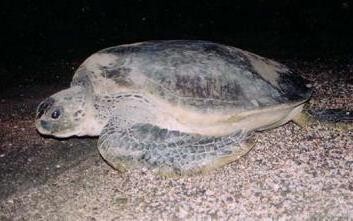
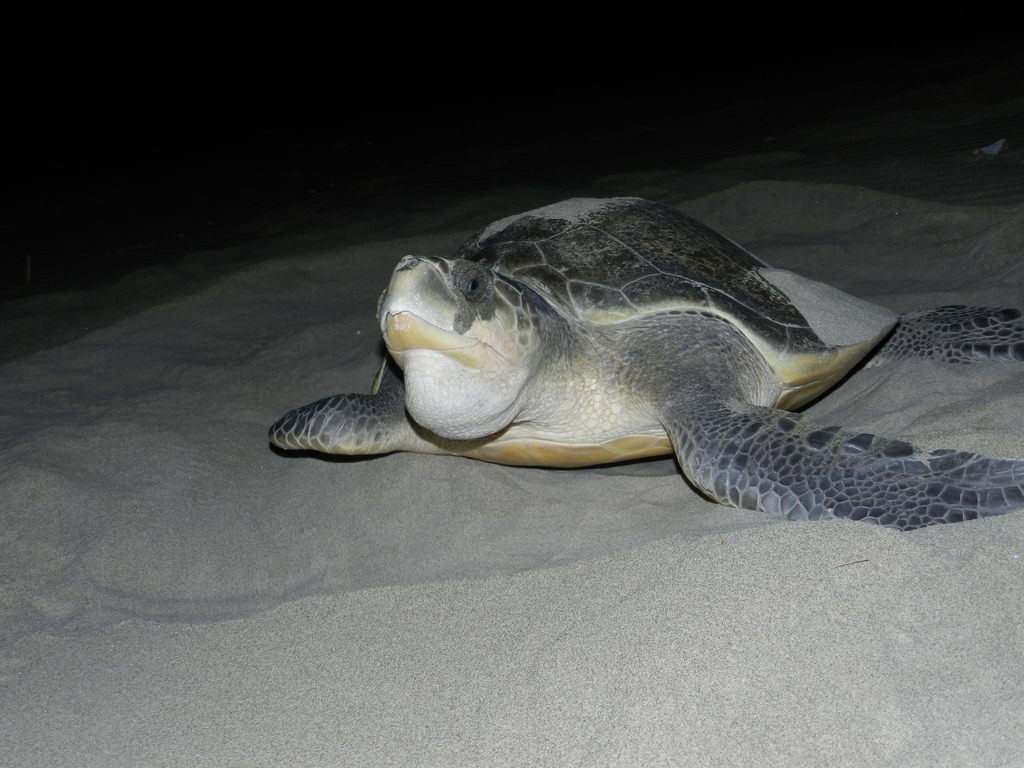
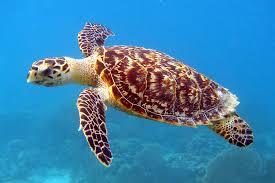
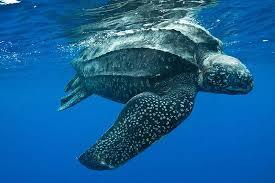
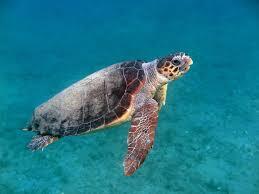
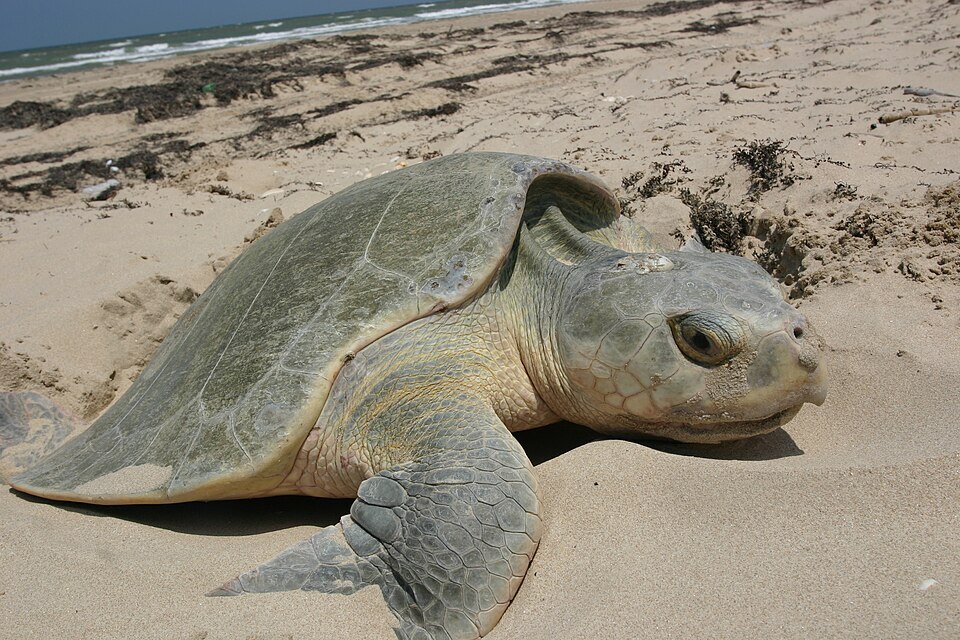
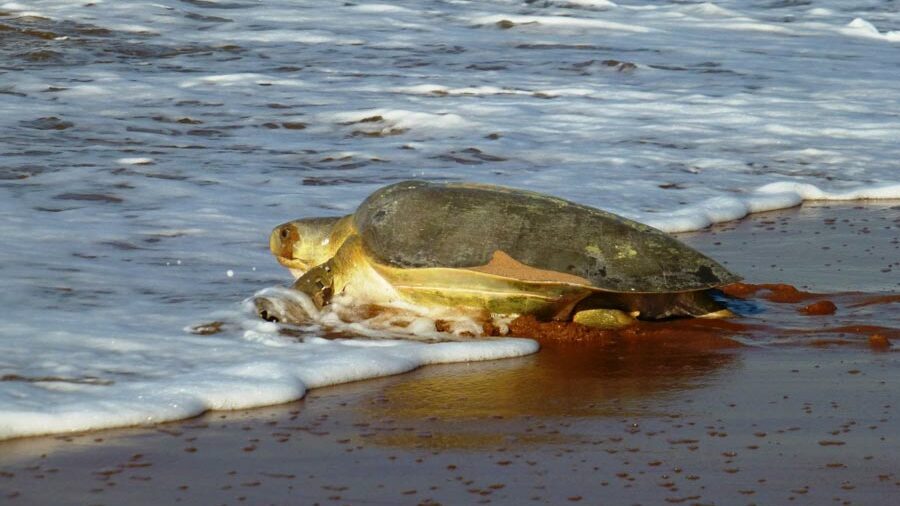
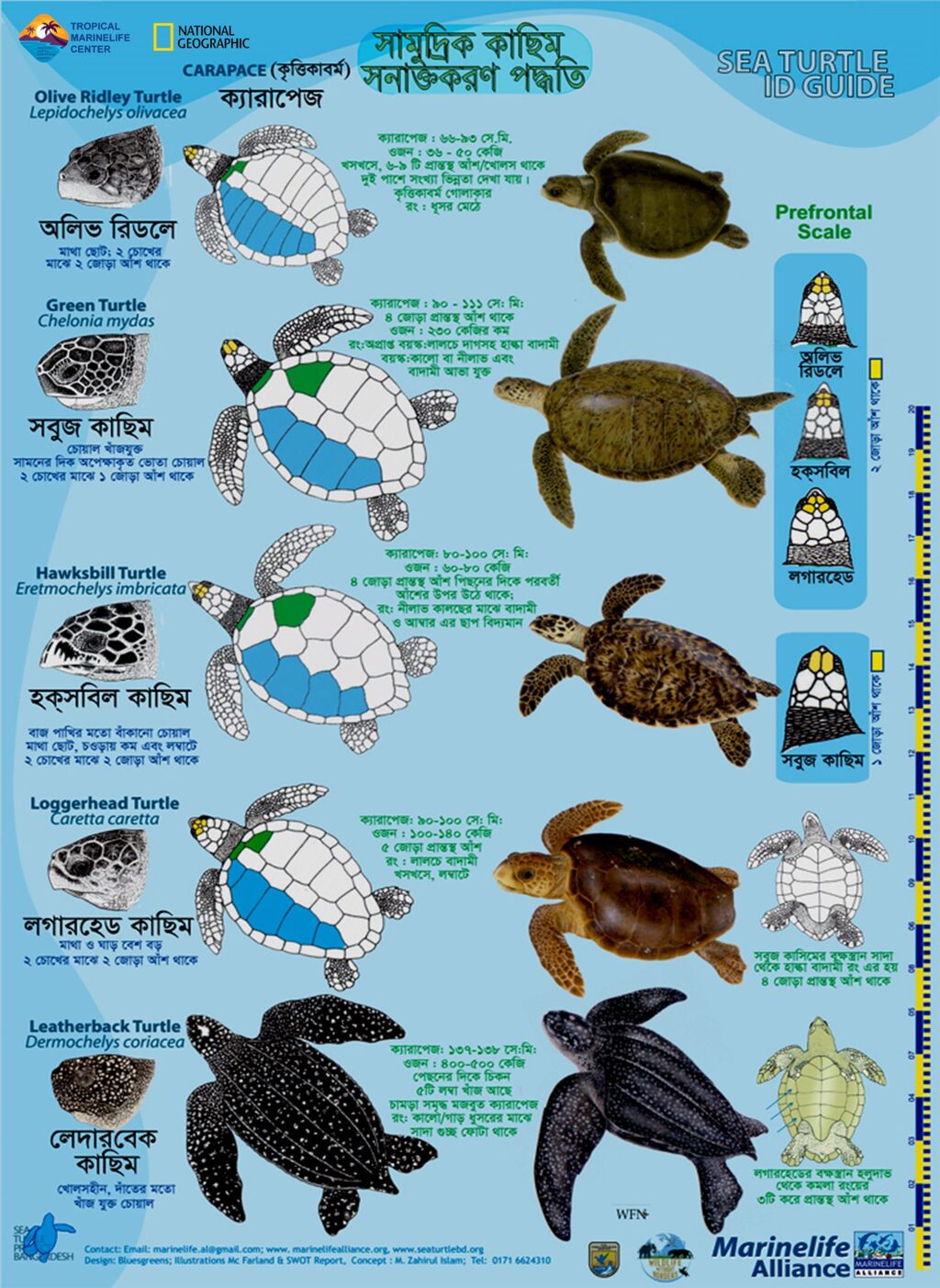
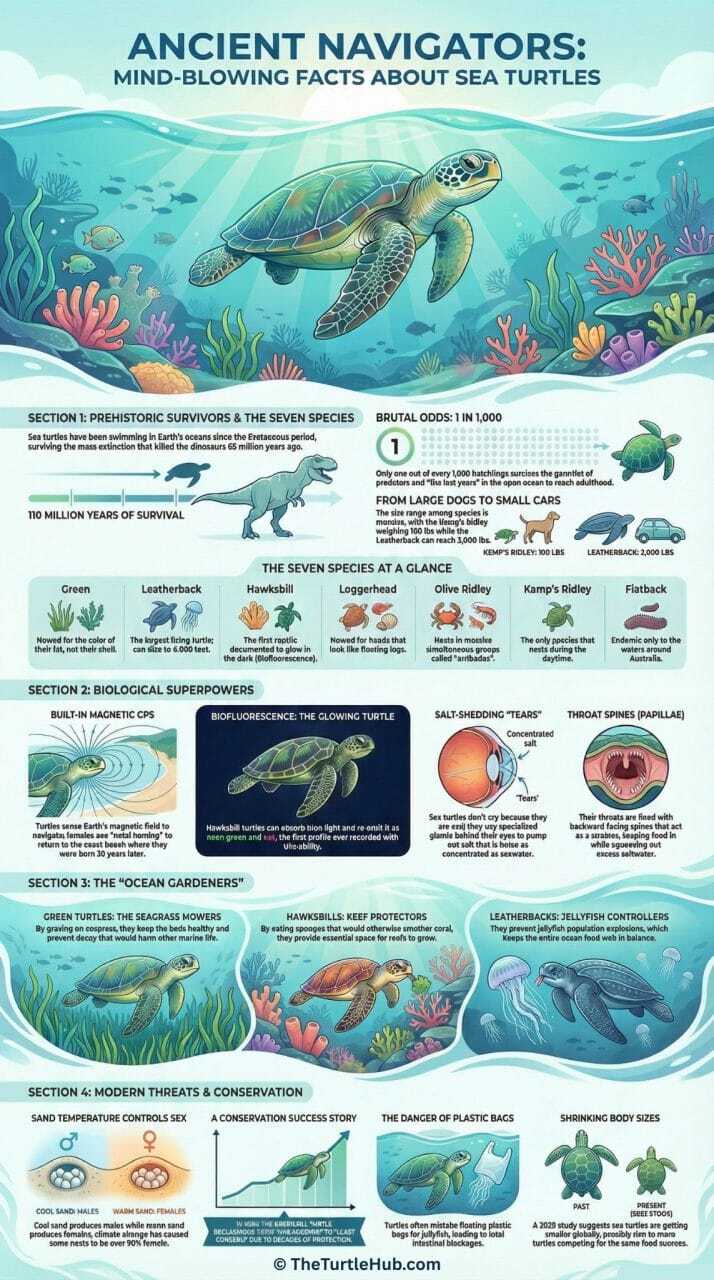
Green Turtle (Chelonia mydas)
The Green Turtle is one of the most widely distributed and best-known sea turtle species in the world. Despite its name, the green turtle is not green externally; the name comes from the greenish colour of its body fat, which results from its largely herbivorous diet. Adult green turtles primarily feed on seagrass and algae, making them the only sea turtle species that is mainly vegetarian.
Green turtles play a crucial ecological role by maintaining healthy seagrass meadows. Their grazing prevents overgrowth, promotes new seagrass growth, and supports biodiversity in coastal ecosystems. These seagrass beds also act as carbon sinks and nursery habitats for fish and invertebrates, linking green turtle conservation directly to climate resilience and fisheries health.
Green turtles are found throughout tropical and subtropical oceans, including the Bay of Bengal. In Bangladesh, they are known to nest on beaches such as Cox’s Bazar, Teknaf, St. Martin’s Island, and offshore islands. Females return to sandy beaches to lay 80–120 eggs per nest, often nesting multiple times in a season.
The species faces serious threats from bycatch in fishing gear, coastal development, egg collection, pollution, and climate change. Artificial lighting on beaches disorients hatchlings, while plastic ingestion can be fatal.
The Green Turtle is listed as Endangered on the IUCN Red List. Protecting nesting beaches, reducing bycatch, conserving seagrass habitats, and raising awareness among coastal communities are essential to ensure the survival of this iconic marine herbivore.
Protecting migratory routes, improving fisheries practices, and reducing marine pollution are key actions needed to safeguard this resilient yet increasingly threatened species.
Olive Ridley Turtle (Lepidochelys olivacea)
The Olive Ridley Turtle is the most abundant sea turtle species globally, yet it is still classified as Vulnerable due to rapid population declines in many regions. It is best known for its spectacular mass nesting events, called arribadas, where thousands of females nest simultaneously.
Olive Ridleys are relatively small sea turtles with olive-coloured shells. They feed on crustaceans, molluscs, fish, and jellyfish, making them opportunistic feeders.
In Bangladesh, Olive Ridley turtles are the most commonly nesting species, particularly along Cox’s Bazar, Teknaf, Kutubdia, and nearby islands. These beaches are of national and regional importance for the species.
Major threats include bycatch in trawl fisheries, egg collection, coastal development, and pollution. Turtle Excluder Devices (TEDs) have proven highly effective in reducing Olive Ridley mortality when properly used.
Protecting nesting beaches and working closely with fishing communities are key to ensuring the long-term survival of Olive Ridley turtles in the Bay of Bengal.
Hawksbill Turtle (Eretmochelys imbricata)
The Hawksbill Turtle is one of the most visually striking sea turtles, recognized by its narrow, pointed beak and beautifully patterned shell with overlapping scutes. Historically, this shell—known as “tortoiseshell”—was heavily exploited for jewellery and decorative items, leading to dramatic population declines.
Hawksbill turtles are closely associated with coral reef ecosystems, where they feed primarily on sponges. This specialized diet helps prevent sponges from outcompeting corals, making hawksbills essential for maintaining healthy reef systems. Healthy reefs, in turn, support fisheries, tourism, and coastal protection.
In the Bay of Bengal, hawksbill turtles are found around coral and rocky reef habitats, including St. Martin’s Island, Bangladesh’s only coral-bearing island. Nesting occurs sporadically along remote beaches.
The Hawksbill Turtle is listed as Critically Endangered on the IUCN Red List. Major threats include illegal trade, coral reef degradation, climate change, bycatch, and loss of nesting beaches. Because hawksbills depend so strongly on coral reefs, reef destruction directly threatens their survival.
Protecting coral reef habitats, enforcing bans on tortoiseshell trade, and reducing fishing-related mortality are essential conservation measures. Saving the hawksbill turtle also means protecting coral reefs—one of the most valuable and vulnerable marine ecosystems on Earth.
Leatherback Turtle (Dermochelys coriacea)
The Leatherback Turtle is the largest living sea turtle and one of the deepest-diving reptiles on the planet. Unlike other sea turtles, it has a flexible, leathery shell rather than a hard carapace, allowing it to dive to depths of over 1,000 metres in search of food.
Leatherbacks primarily feed on jellyfish and play a key role in controlling jellyfish populations, which can otherwise increase due to overfishing and ecosystem imbalance. By regulating jellyfish numbers, leatherbacks help maintain healthy marine food webs.
This species has a global distribution and migrates across entire ocean basins. In the Bay of Bengal, leatherbacks are mostly found in offshore waters and are rarely seen near shore, though they may pass through Bangladeshi waters during migration.
Leatherback turtles face severe threats from bycatch, plastic ingestion (mistaking plastic bags for jellyfish), vessel strikes, and climate change. Rising temperatures and beach erosion threaten nesting success worldwide.
The Leatherback Turtle is listed as Vulnerable globally, but some populations are Critically Endangered. Due to their wide-ranging nature, protecting leatherbacks requires strong international cooperation, fisheries management, and global action to reduce plastic pollution.
Loggerhead Turtle (Caretta caretta)
The Loggerhead Turtle is named for its large, powerful head and strong jaws, which allow it to crush hard-shelled prey such as crabs, molluscs, and conchs. It is one of the most migratory sea turtle species, traveling thousands of kilometres between nesting beaches and feeding grounds.
Loggerheads are found in temperate and tropical waters worldwide and are occasional visitors to the Bay of Bengal. While nesting in Bangladesh is rare, the region’s offshore and coastal waters serve as important foraging and migration areas.
This species plays an important ecological role by controlling populations of benthic invertebrates, helping maintain balance in marine food webs. Loggerhead hatchlings spend their early years drifting in ocean currents before moving to coastal feeding areas as juveniles and adults.
Loggerhead turtles face significant threats, particularly bycatch in longlines, trawls, and gillnets. Vessel strikes, habitat degradation, marine pollution, and climate change further contribute to population declines. Like all sea turtles, loggerheads are sensitive to rising sand temperatures, which affect hatchling sex ratios.
The Loggerhead Turtle is classified as Vulnerable globally, with some regional populations listed as Endangered. Conservation efforts focus on international cooperation, as loggerheads cross multiple national boundaries during their lifetime.
Kemp’s Ridley Turtle (Lepidochelys kempii)
The Kemp’s Ridley Turtle is the rarest and most endangered sea turtle species in the world. It is best known for its synchronized arribada nesting, which occurs mainly along the Gulf of Mexico.
This species primarily feeds on crabs and other crustaceans in shallow coastal waters. Kemp’s Ridleys mature relatively quickly compared to other sea turtles, but their restricted nesting range makes them highly vulnerable.
Kemp’s Ridley turtles are not native to the Bay of Bengal and are extremely unlikely to be found in Bangladeshi waters. However, their conservation story is globally important as a symbol of successful international cooperation.
Once on the brink of extinction, Kemp’s Ridley populations have shown signs of recovery due to strict nest protection, bycatch reduction, and international agreements. The species remains Critically Endangered, reminding us that strong conservation action can reverse even severe declines.
Flatback Turtle (Natator depressus)
The Flatback Turtle is unique among sea turtles because it is found only in Australian waters. It has a flatter shell and produces fewer but larger eggs than other species.
Flatbacks feed on soft-bodied invertebrates such as sea cucumbers, jellyfish, and soft corals. Their restricted range makes them highly vulnerable to localized threats.
Although Flatback turtles do not occur in Bangladesh, they are an important part of global sea turtle diversity. Protecting them highlights the importance of regional conservation tailored to species-specific needs.
coastal & marine Cetaceans
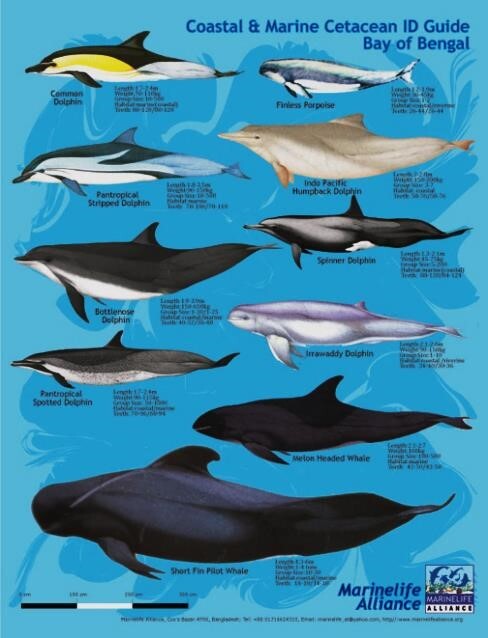
Indo-Pacific Humpback Dolphin

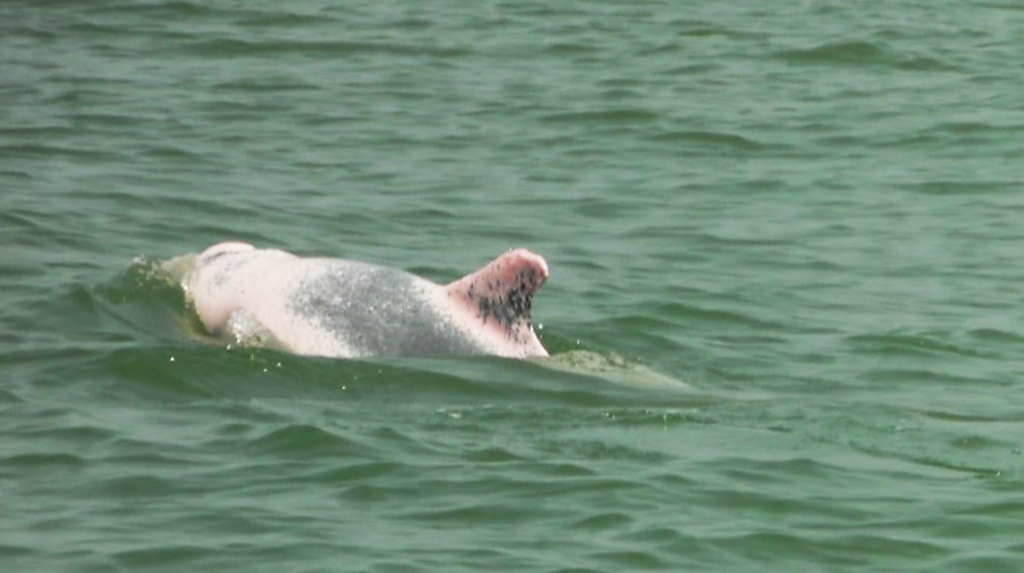
Indo-Pacific Humpback Dolphin
Sousa chinensis
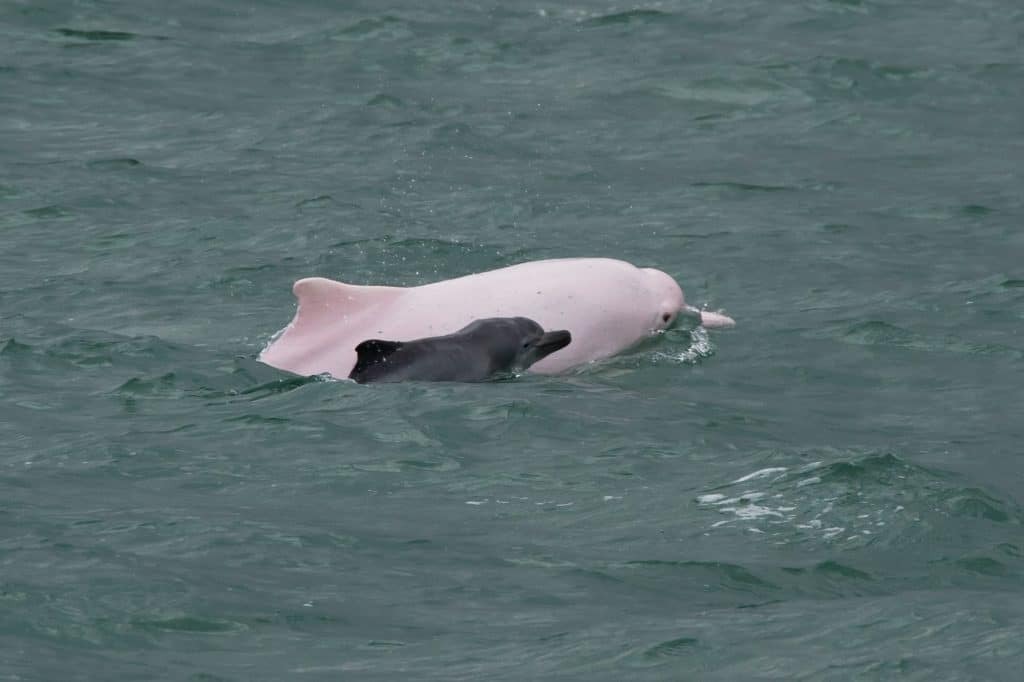
The Indo-Pacific humpback dolphin (Sousa chinensis) is a distinctive coastal dolphin species found in shallow, nearshore waters across parts of Asia. One highly threatened population, often referred to as the Taiwanese humpback dolphin, lives only in the coastal waters of western Taiwan. This sub-population is listed as Critically Endangered, with fewer than 50 individuals believed to remain, making it one of the most endangered dolphin populations in the world.
Size and Identification
- Maximum length:
Male – up to 2.8 m | Female – up to 2.6 m | Calf – around 1 m - Maximum weight:
Up to 280 kg (adult males) - IUCN Red List status: Vulnerable
- Taiwanese sub-species: Critically Endangered
Indo-Pacific humpback dolphin look like?
The appearance of Indo-Pacific humpback dolphins varies greatly depending on where they live. Calves are typically pale grey at birth and gradually change colour as they age, often passing through a mottled phase. In some regions, such as China and Hong Kong, adults can appear white or pink, earning them the name Chinese white dolphin. In other parts of their range, they are more uniformly grey, similar in appearance to the Indian Ocean humpback dolphin.
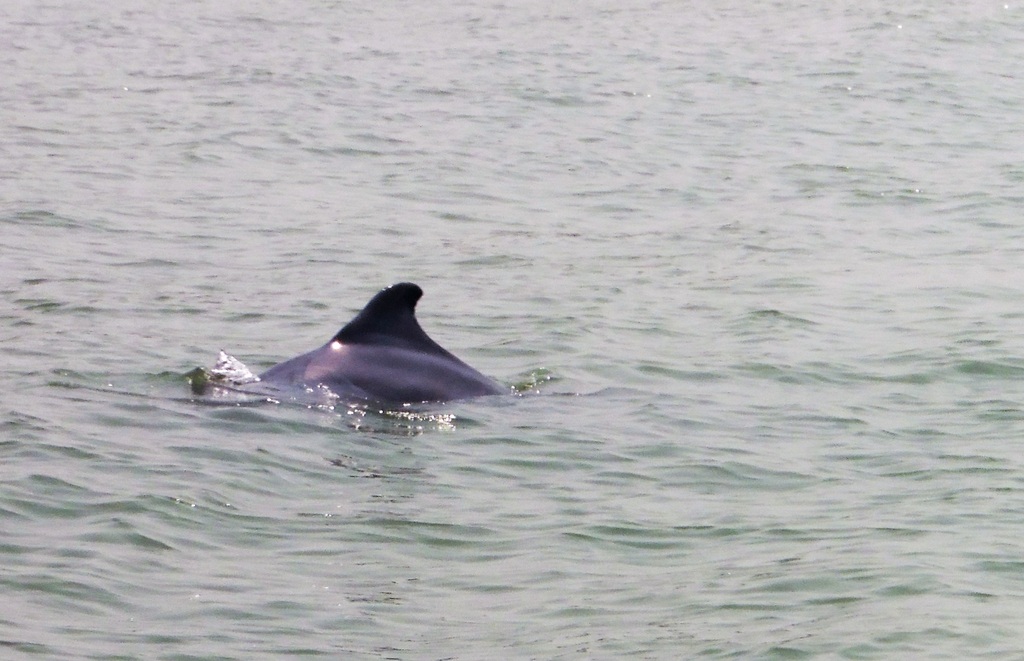
Despite their name, Indo-Pacific humpback dolphins do not always have a pronounced hump. In many regions, including Australia, the dorsal profile is relatively smooth, with only a low ridge beneath the dorsal fin.
Life of Indo-Pacific humpback dolphin?
Life for Indo-Pacific humpback dolphins is increasingly precarious, largely due to their preference for shallow, coastal waters. Living close to shore brings them into frequent contact with human activities such as fishing, shipping, coastal development, and pollution. In some areas, dolphins are intentionally hunted, while others are accidentally caught in fishing nets. Tragically, bycaught individuals are sometimes retained and used as food.
Because these dolphins live close to densely populated coastlines, they face higher risks than offshore species. The total global population size of Indo-Pacific humpback dolphins remains unknown, but evidence suggests that many local populations are declining rapidly.
What do they eat?
Indo-Pacific humpback dolphins feed on a wide range of coastal fish species, depending on local availability. They are opportunistic feeders and are often seen near fishing boats, trawlers, and nets, where escaping fish provide easy prey. While this behavior can increase feeding opportunities, it also places dolphins at greater risk of entanglement and injury.
Their Habitat
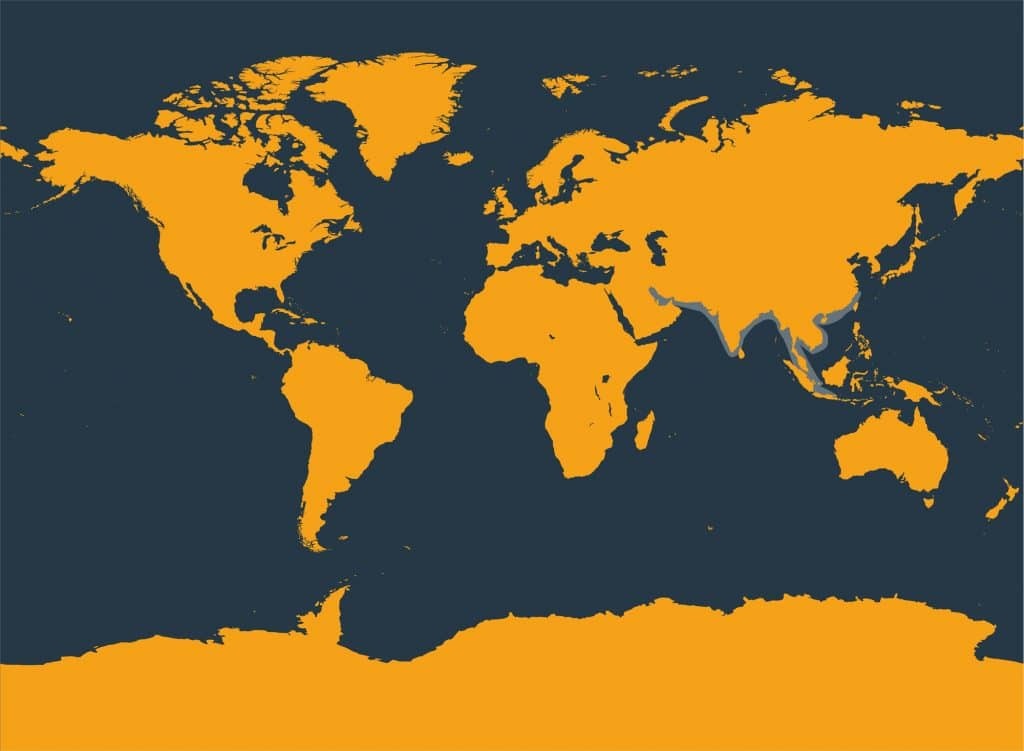
Historically, Indo-Pacific humpback dolphins inhabited shallow coastal waters from central China, through Southeast Asia, and westward to the eastern coast of India. Today, their distribution has become increasingly fragmented. In many parts of their former range, dolphins have disappeared entirely, primarily due to human-induced pressures such as habitat loss, pollution, and fishing impacts.
Threats from human activities
Some of the most heavily impacted Indo-Pacific humpback dolphins live in Hong Kong waters, among the busiest shipping routes in the world. Here, dolphins face constant disturbance from vessel traffic, large-scale land reclamation projects, underwater noise, and chemical pollution. Pollutants can be transferred from mother to calf through milk, reducing calf survival rates. In some years, no calves survive, contributing to long-term population decline.
Main threats include:
- Hunting, both intentional and opportunistic
- Entanglement in fishing gear, especially gillnets and trawls
- Marine pollution, including chemical contaminants and plastics
- Habitat loss from coastal development and land reclamation
We can help Indo-Pacific humpback dolphins
Indo-Pacific humpback dolphins urgently need protection. By supporting conservation efforts, you can help:
- End hunting and harmful fishing practices
- Reduce deaths caused by fishing gear
- Protect and restore coastal habitats
- Promote cleaner, healthier seas
You can make a difference by donating, fundraising, or supporting marine conservation programs that work to protect dolphins and their habitats. Together, we can help ensure a future where Indo-Pacific humpback dolphins can live safe and free.
Finless Porpoise
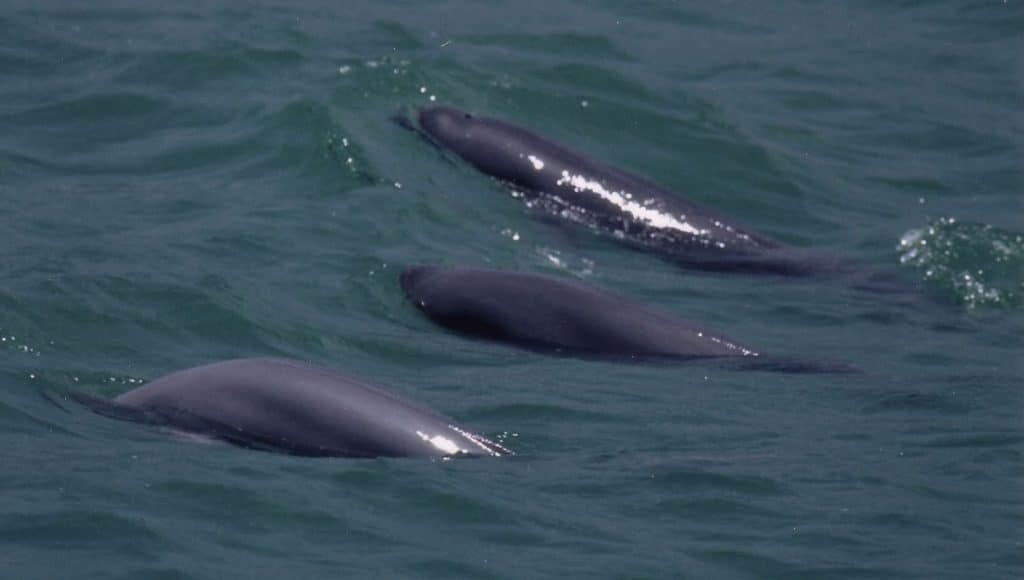
Indo-Pacific Finless Porpoise
(Neophocaena phocaenoides)
The Indo-Pacific finless porpoise is one of the smallest and most distinctive marine mammals found in coastal waters of the Indian Ocean and western Pacific. Until relatively recently, finless porpoises were considered a single species. Scientific research has now confirmed the existence of at least two distinct species—the Indo-Pacific finless porpoise and the narrow-ridged finless porpoise—with further sub-species possibly yet to be identified. This highlights how much remains to be learned about these elusive animals.
Physical Characteristics
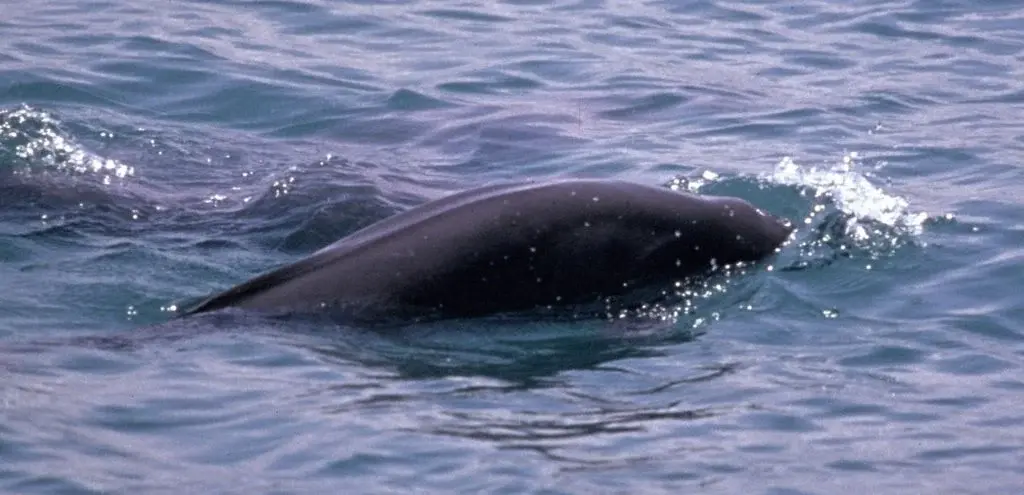
As its name suggests, the finless porpoise lacks a dorsal fin, setting it apart from dolphins and most other porpoises. Instead, it has a low ridge running along its back, covered with small, wart-like tubercles that are thought to help with hydrodynamics and stability. The species has a rounded, bulbous head, no beak, and a smooth, streamlined body adapted for life in shallow waters. Adults reach a maximum length of around 1.7 metres and can weigh up to 70 kilograms. Males and females are similar in size, while calves are born at approximately 75 centimetres in length.
Behaviour and Lifestyle
Indo-Pacific finless porpoises are active and energetic, often seen swimming just below the water’s surface. They are known for their rapid movements, sudden changes in direction, and short surfacing behaviour. Typically found alone or in small groups, these porpoises are naturally shy and tend to avoid boats and human activity. Their cautious nature reflects the many threats they face in coastal environments heavily influenced by human use.
Calves are closely bonded to their mothers and have been observed riding on their mother’s back, gripping the dorsal ridge and surfacing alongside her to breathe. This strong maternal care is essential for survival in challenging coastal habitats.
Diet
Being among the smallest cetaceans, Indo-Pacific finless porpoises feed on small, bottom-dwelling marine organisms. Their diet includes fish, shrimp, crabs, squid, octopus, and cuttlefish. They play an important role in maintaining balance in coastal food webs by regulating populations of these species.
Habitat and Distribution
This species shows a strong preference for shallow, nearshore waters with soft or sandy sea bottoms. Typical habitats include estuaries, bays, mangrove channels, and coastal waters, often close to river mouths. The Indo-Pacific finless porpoise is distributed from the southern East China Sea, through parts of Southeast Asia and the Indo-Malay region (largely absent from the Philippines), westward across the Indian Ocean to the Persian Gulf. In Bangladesh, suitable habitats include estuarine and coastal waters of the Bay of Bengal.
Conservation Status and Threats
The Indo-Pacific finless porpoise is currently listed as Vulnerable on the IUCN Red List. The most serious threat to the species is entanglement in fishing gear, particularly gillnets and other nearshore fishing equipment. Thousands of porpoises are believed to die each year due to accidental capture. Pollution, including plastic waste, chemical contaminants, and noise, poses an increasing threat throughout their range.
Why Protection Matters
Protecting the Indo-Pacific finless porpoise is essential for the health of coastal ecosystems. As an indicator species, its decline signals broader environmental problems affecting marine biodiversity. Reducing bycatch, improving fisheries management, controlling pollution, and raising awareness among coastal communities are critical steps toward ensuring a safer future for this unique and vulnerable porpoise.
Irrawaddy Dolphin
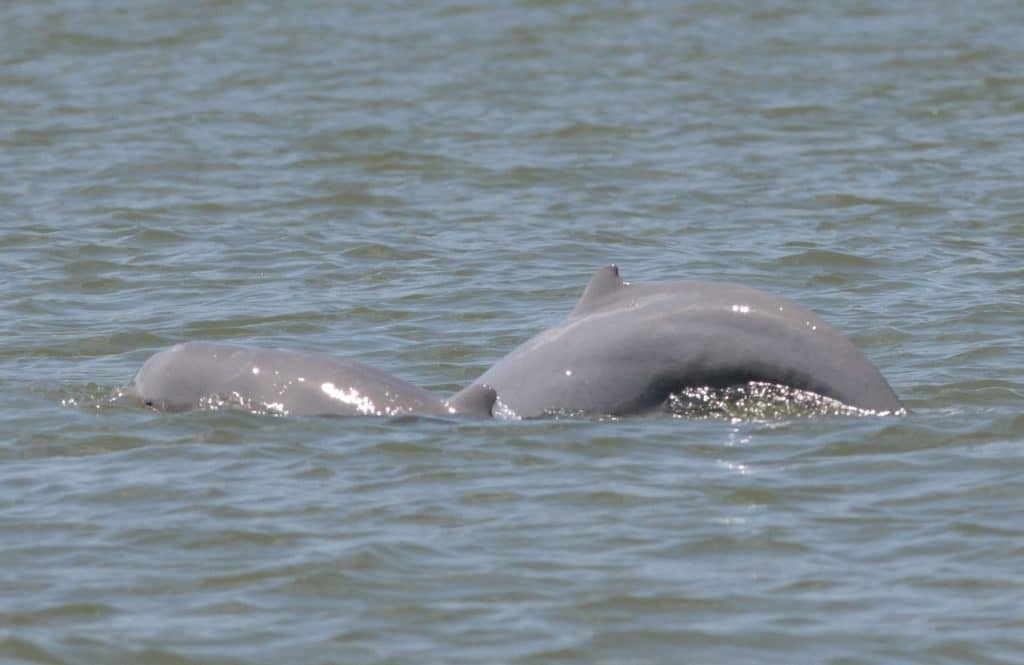
Irrawaddy Dolphin(Orcaella brevirostris)
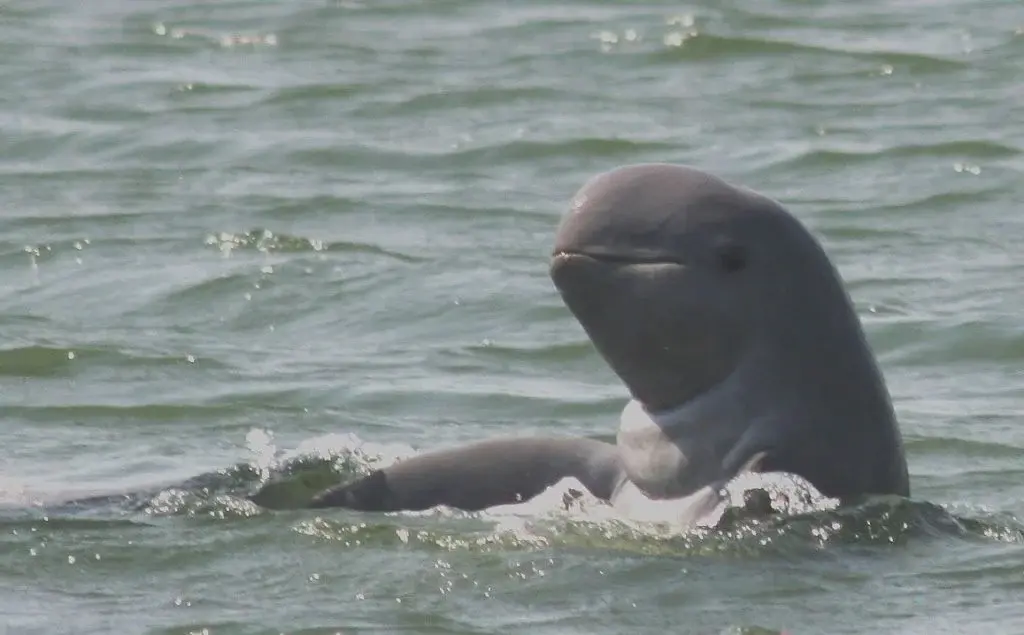
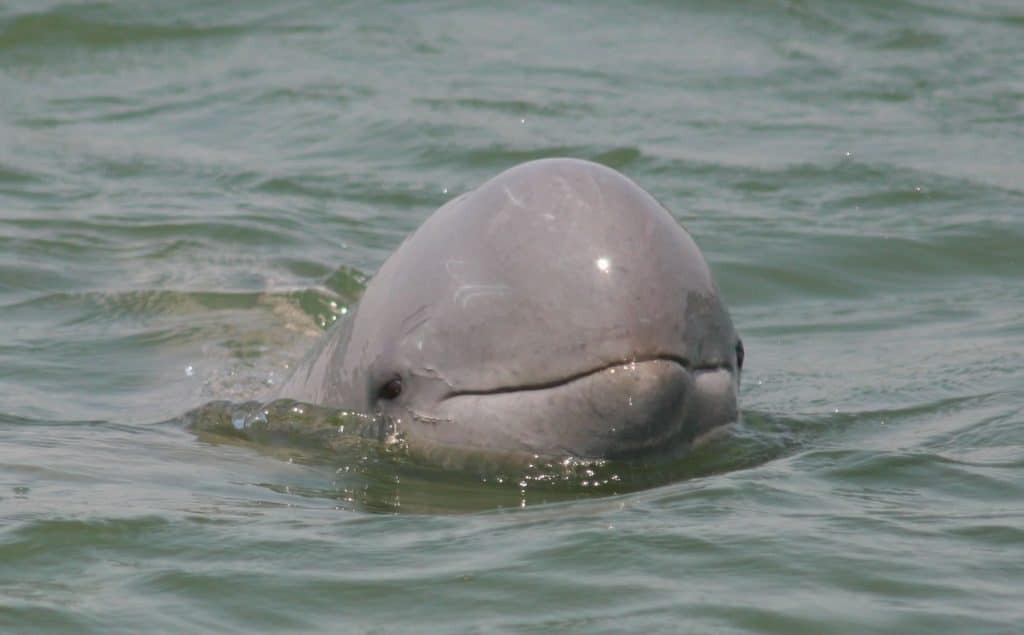
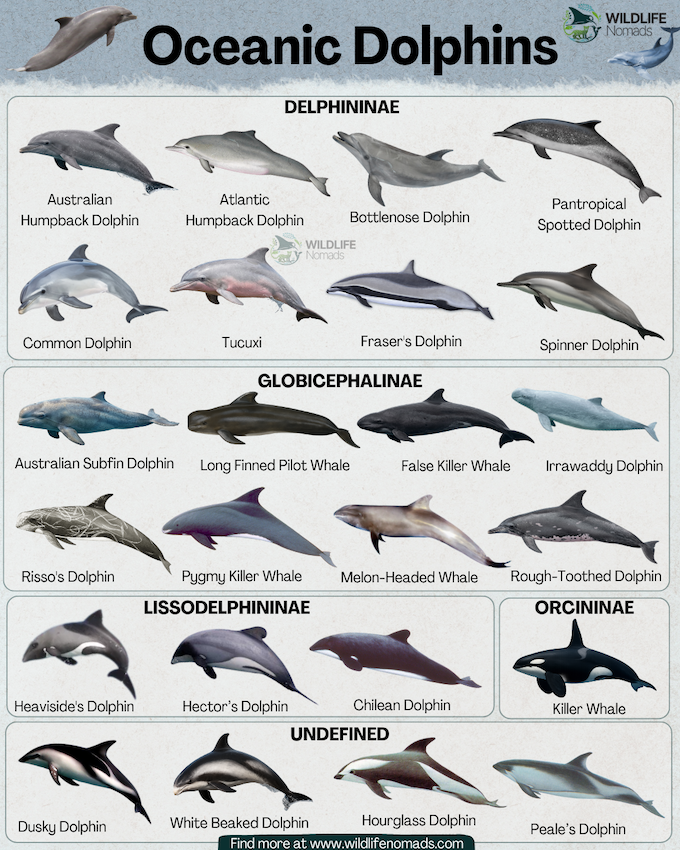
Irrawaddy dolphins are distinctive, small-to-medium-sized dolphins best known for their rounded heads and expressive faces. Often compared to baby beluga whales because they lack a beak, Irrawaddy dolphins can be easily distinguished by their small dorsal fin. Despite their appearance, they are not closely related to belugas.
These dolphins are highly social and display unusual behaviors, including spitting streams of water from their mouths, particularly during feeding or social interactions. Their flexible necks and mobile lips give them a remarkably expressive appearance.
Other names: Ayeyarwady River dolphin, Mahakam River dolphin
IUCN status: Endangered
All freshwater populations and the Malampaya Sound population in the Philippines are classified as Critically Endangered.
Physical characteristics
Irrawaddy dolphins have a smooth, rounded forehead and no protruding beak. Their bodies are grey, fading to a lighter shade on the underside. The dorsal fin is small and triangular, while the flippers are long, broad, and gently curved. Their tail flukes are wide and powerful, adapted for slow but steady swimming.
- Maximum length: up to 2.7 m
- Maximum weight: up to 130 kg
Behaviour and social life
Irrawaddy dolphins usually live in small groups of fewer than six individuals, though larger temporary gatherings have been observed in deep pools where food is abundant. They are slow swimmers and tend to avoid boats, rarely bow-riding and often diving when disturbed.
Typical behaviors include spyhopping, rolling at the surface, tail slapping, and gentle flipper waving. Leaping is uncommon. Their water-spitting behavior may help disorient fish during feeding.
Population sizes across their range remain uncertain, but all known populations are small and declining.
Diet
Irrawaddy dolphins feed on a wide variety of fish and are known to forage near the bottom, sometimes surfacing with mud on their bodies. Coastal populations also consume squid and octopus. In marine environments, they often follow tidal movements, entering estuaries and river mouths during high tides and moving offshore as tides recede.
Distribution and habitat
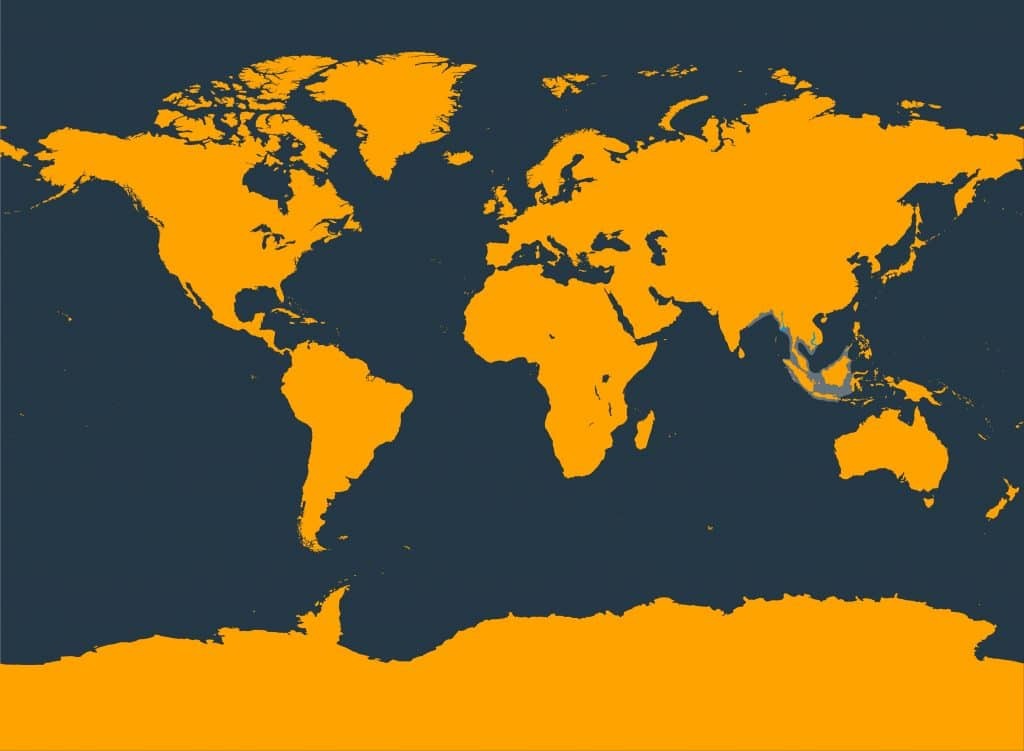
Irrawaddy dolphins inhabit both freshwater and coastal marine environments in South and Southeast Asia, including the Bay of Bengal.
Five isolated freshwater populations remain: Ayeyarwady River (Myanmar)
Mahakam River (Borneo, Indonesia), Mekong River (Cambodia and Lao PDR), Chilika Lake (India), Songkhla Lake (Thailand). Marine populations occur in shallow, sheltered coastal waters such as estuaries, mangrove channels, river deltas, and bays. They are rarely found far from shore. In Bangladesh it is occurred along the entire coast and coastal riverine habitat.
Cooperative fishing
In parts of Myanmar, Irrawaddy dolphins have a unique cooperative fishing relationship with local fishers using cast nets. Fishers signal readiness by tapping their boats, after which dolphins herd fish toward the nets. The dolphins benefit by feeding on fish disoriented or trapped during the netting process. This behavior reflects a long-standing interaction between dolphins and riverine fishing communities.
Threats to Irrawaddy dolphins
Irrawaddy dolphins face severe and ongoing threats throughout their range:
- Fishing gear entanglement: Accidental capture in gillnets and other small-scale fishing gear is the leading cause of mortality. Deaths from entanglement exceed birth rates in several populations.
- Habitat loss and fragmentation: Dam construction has reduced river flow, altered sediment dynamics, and fragmented freshwater populations, confining dolphins to smaller river sections. Coastal habitats have also been affected by reduced freshwater input into estuaries.
- Pollution: Industrial and agricultural runoff, oil contamination, pesticides, and other pollutants degrade water quality. Several populations show high levels of skin disease linked to poor environmental conditions.
- Captive capture: Historically, Irrawaddy dolphins were captured from the wild for aquarium display. Although international commercial trade was banned in 2004, past removals have had lasting impacts on small populations.
Conservation outlook
Irrawaddy dolphins are among the most threatened cetaceans in Asia. Their survival depends on maintaining healthy river and coastal ecosystems, reducing accidental deaths in fishing gear, and protecting remaining habitats across their limited and fragmented range.
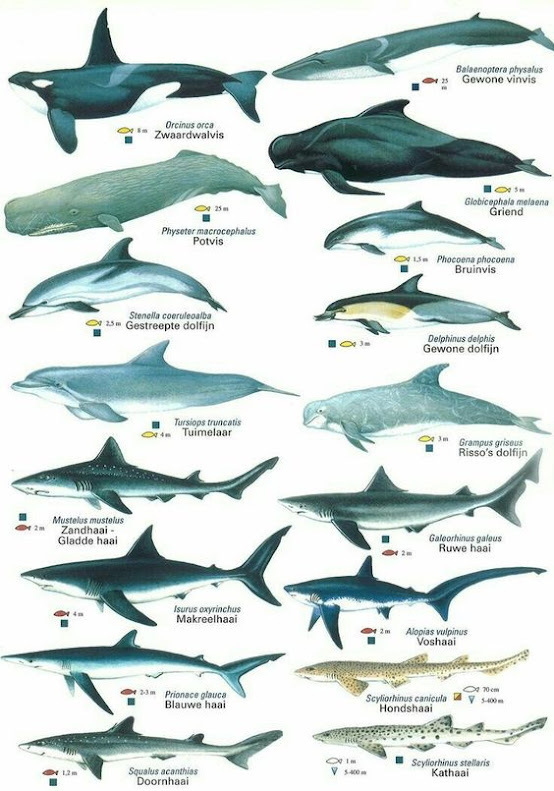
RISSO'S DOLPHIN
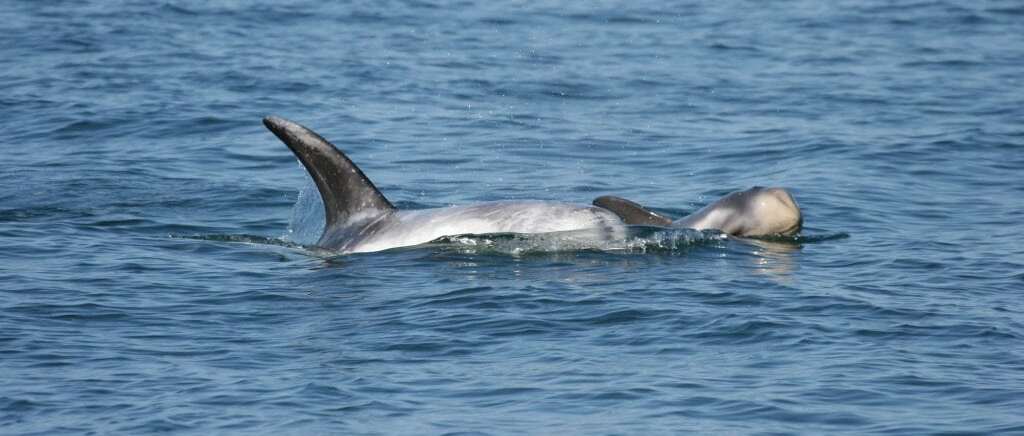
Risso’s Dolphin (Grampus griseus)
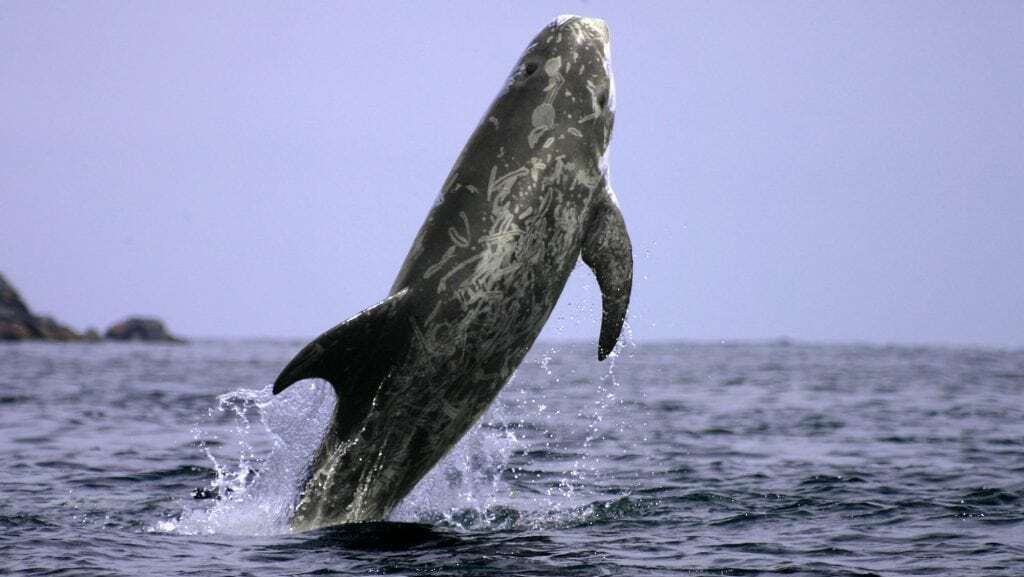
Risso’s dolphins are one of the most distinctive dolphin species, easily recognised by their robust bodies and heavily scarred appearance. As they age, their skin becomes increasingly marked with scratches and white scars caused by interactions with other dolphins and encounters with their primary prey, squid.
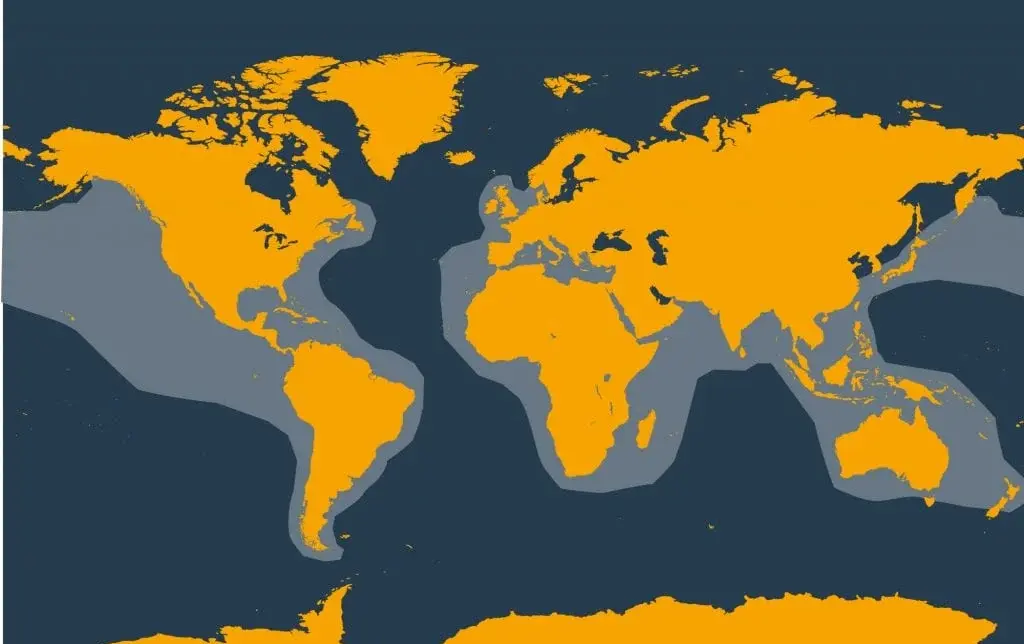
These dolphins are mainly associated with deeper offshore waters and are therefore less studied than many coastal species. However, in certain regions with steep underwater drop-offs, Risso’s dolphins can be observed very close to shore, providing valuable opportunities for research and long-term monitoring.
Other names: Grampus, Grey grampus, White-headed grampus
Size and Identification
- Maximum length: up to 4.0 m
- Maximum weight: up to 500 kg
- IUCN conservation status: Least Concern
Risso’s dolphins have a blunt, rounded head with no visible beak and a tall, often irregularly shaped dorsal fin. Calves are darker grey at birth, gradually lightening over time as scars accumulate. Their flippers are long and pointed, and the body is thick and powerful compared to many other dolphin species.
Behaviour and Social Life
Risso’s dolphins are highly social and are usually found in groups ranging from a few individuals to several dozen. They are energetic animals and are frequently seen breaching, slapping the water with their tails or heads, and engaging in social interactions within the group. Although they often avoid boats, they may occasionally be observed interacting with other dolphin species, particularly bottlenose dolphins.
Diet
Risso’s dolphins feed primarily on squid, making them one of the most specialised squid-eating dolphins. Their diet may also include cuttlefish, octopus, shrimp, and other cephalopods, depending on local availability and habitat.
Distribution and Habitat
Risso’s dolphins are found in temperate and tropical waters worldwide. They typically inhabit deep waters along continental shelf edges and slopes but may occur closer to shore where underwater terrain drops sharply and food is abundant.
They are capable of deep dives, reaching depths of up to 1,000 metres, allowing them to hunt squid in deep ocean layers.
Key Facts
- Live in groups of up to 50 dolphins
- Can dive to depths of around 1,000 metres
- Have up to 14 teeth, found only in the lower jaw
- Individuals can be identified by unique scar patterns and dorsal fin shapes
Threats to Risso’s Dolphins
Although globally listed as Least Concern, Risso’s dolphins face several threats in parts of their range:
- Hunting: Targeted hunting occurs in some regions, including parts of Japan.
- Fishing gear entanglement: Accidental entanglement in nets and ropes can lead to injury or death.
- Pollution: Chemical contaminants from plastics, oil spills, and industrial waste accumulate in their bodies, affecting health and reproduction.
- Noise pollution: Underwater noise from shipping, sonar, and offshore industrial activities can disrupt communication and navigation.
- Captivity: A small number of Risso’s dolphins remain in captivity worldwide, raising ongoing animal welfare concerns.
Why Risso’s Dolphins Matter
As deep-diving predators, Risso’s dolphins play an important role in maintaining balance within marine ecosystems. Protecting them also helps safeguard the wider ocean habitats they depend on.
INDO PACIFIC BOTLENOSE DOLPHIN
Indo-Pacific Bottlenose Dolphin
-Tursiops aduncus
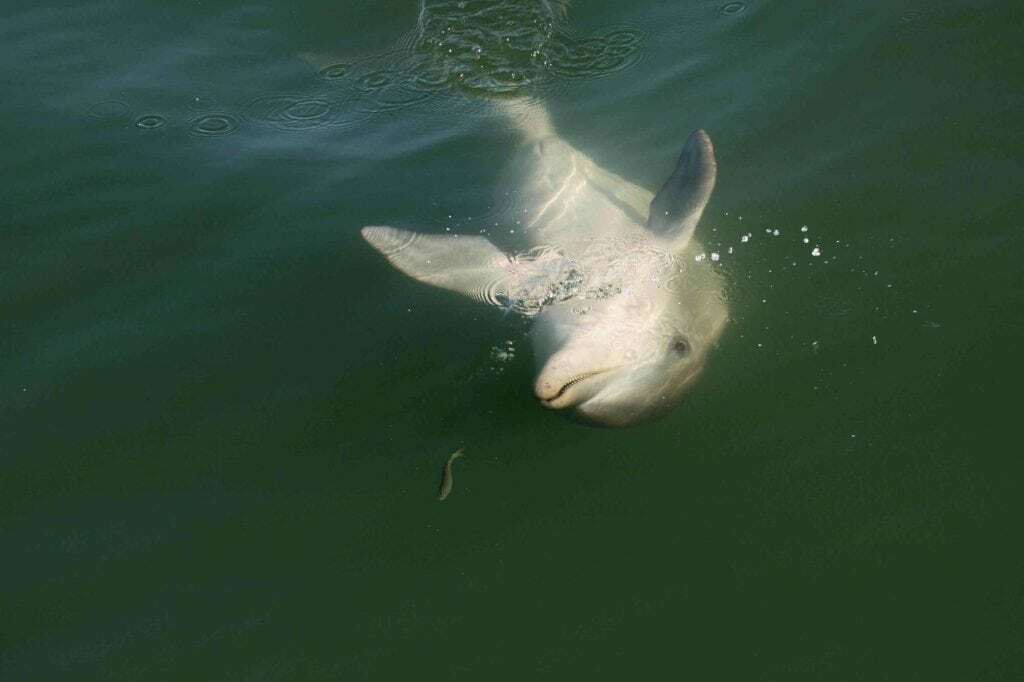
Graceful, intelligent, and highly adaptable, the Indo-Pacific bottlenose dolphin is a familiar coastal dolphin species of the Indian and western Pacific Oceans. Although very similar in appearance to the common bottlenose dolphin, it has only been formally recognised as a separate species in recent decades based on genetic and physical differences.
Key facts
- Maximum length: up to 2.7 m
- Maximum weight: up to 230 kg
- Social structure: small groups (pods)
- IUCN conservation status: Near Threatened
What do Indo-Pacific bottlenose dolphins look like?
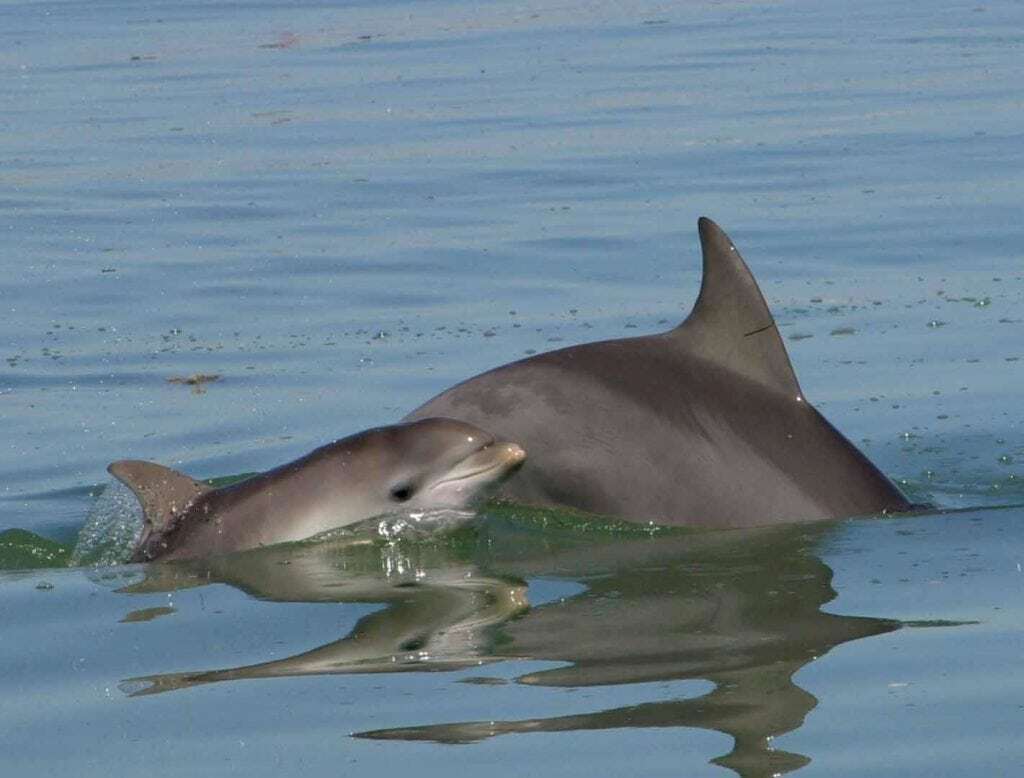
Indo-Pacific bottlenose dolphins have a sleek, streamlined body with shades of grey and bluish-grey on the back and lighter colouring on the belly. Some individuals show light speckling on the underside, especially as they age. They have a longer, narrower beak than the common bottlenose dolphin and a more distinctly curved dorsal fin. Their strong bodies and expressive faces make them one of the most recognisable dolphin species in coastal waters.
Where do they live?
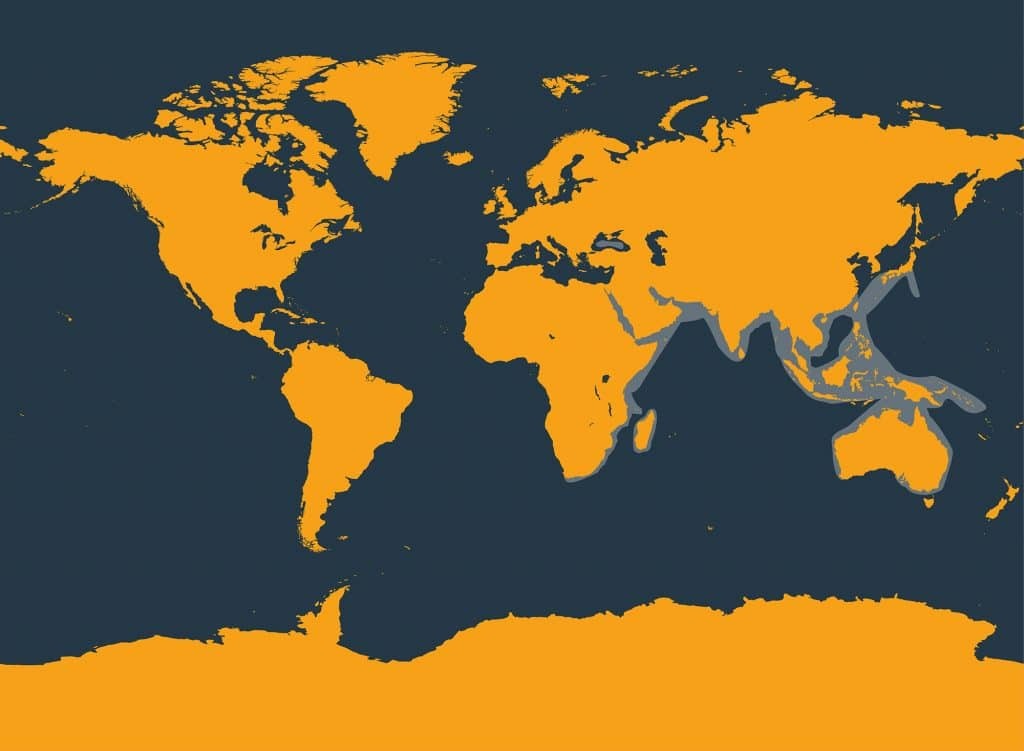
This species is found exclusively in the tropical and subtropical waters of the Indian Ocean and western Pacific Ocean. Unlike oceanic dolphins, Indo-Pacific bottlenose dolphins strongly prefer shallow coastal habitats, including bays, lagoons, estuaries, seagrass meadows, coral reef systems, and nearshore waters. Some populations live close to large human settlements and even within heavily modified urban waterways.
Life of Indo-Pacific bottlenose dolphins?
Indo-Pacific bottlenose dolphins are highly social animals. They usually live in pods of 5–15 individuals, although larger groups may form temporarily for feeding or socialising. Females maintain strong social networks, while males often form long-lasting alliances that can persist for many years. Calves remain with their mothers for several years, learning essential survival skills such as foraging techniques, communication, and social behaviour.
What do they eat?
These dolphins are opportunistic feeders with a varied diet. They mainly eat fish, along with squid and octopus, depending on local availability. Their adaptability allows them to forage successfully in many environments, from coral reefs and seagrass beds to estuaries and busy coastal zones.
Living close to people
Because Indo-Pacific bottlenose dolphins inhabit coastal and estuarine waters, they often share space with human activities such as fishing, shipping, tourism, and coastal development. In some regions, small resident populations live permanently in urbanised waterways, demonstrating both their adaptability and their vulnerability to human pressures.
Threats to Indo-Pacific bottlenose dolphins
Living close to shore exposes this species to multiple threats, including:
- Accidental capture in fishing nets and lines
- Habitat degradation from coastal development and dredging
- Pollution, including plastics, oil, and chemical contaminants
- Disturbance from boat traffic and underwater noise
- Capture for captivity in some parts of their range
These pressures have contributed to population declines in several regions.
Why their conservation matters
As top predators, Indo-Pacific bottlenose dolphins play an important role in maintaining healthy marine ecosystems. Their presence is often an indicator of overall coastal ecosystem health. Protecting this species also helps safeguard the wider marine habitats and fisheries on which coastal communities depend.
Pantropical Spotted Dolphin
Pantropical Spotted Dolphin
-Stenella attenuata
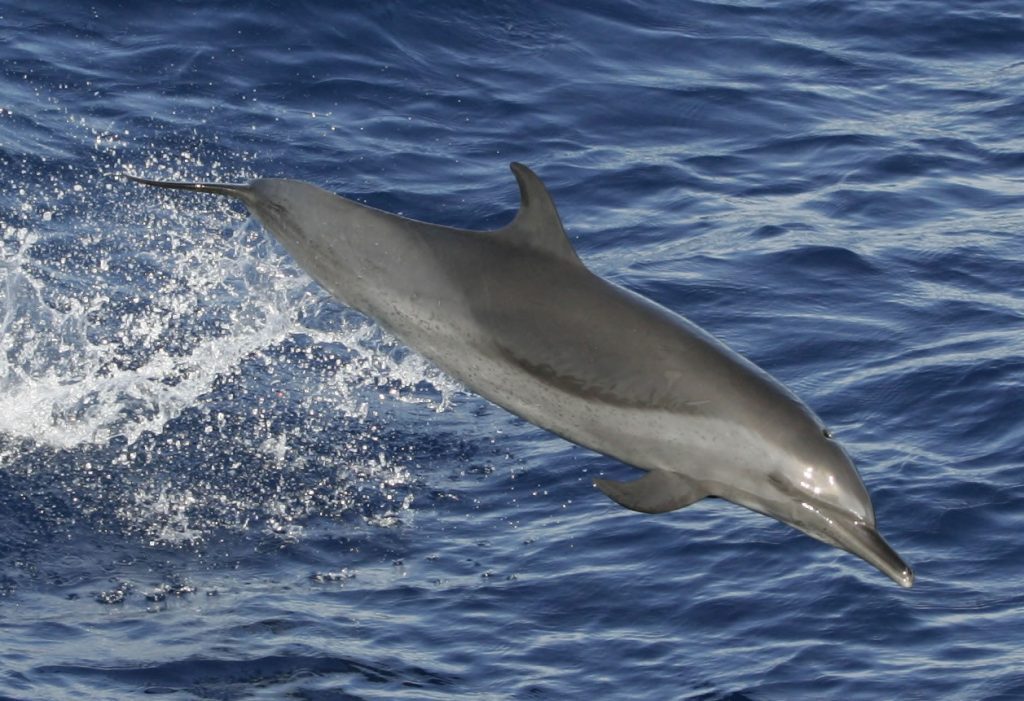
The pantropical spotted dolphin is a fast, agile oceanic dolphin found throughout warm waters around the world. It is well known for its distinctive spotting pattern, which develops gradually as the animal matures. The extent and intensity of these spots vary widely between individuals and populations.
Key facts
- Maximum length: up to 2.6 m
- Maximum weight: up to 119 kg
- Life expectancy: up to 46 years
- IUCN conservation status: Least Concern
What do they look like?
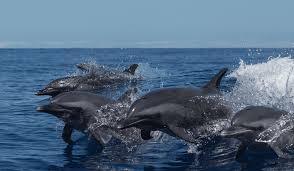
Pantropical spotted dolphins are slender and streamlined, built for speed and agility. Calves are born without spots and develop their characteristic pattern as they age. Adults typically have light spots on a darker grey back and darker spots on a lighter belly and sides. The long, narrow snout often has a white tip, and the lips are pale. Their dorsal fin is tall, narrow, and strongly curved, while the flippers are small and pointed. Dark stripes run from the eye to the head and from the mouth toward the flippers, giving the species a distinctive facial pattern.
Where do they live?
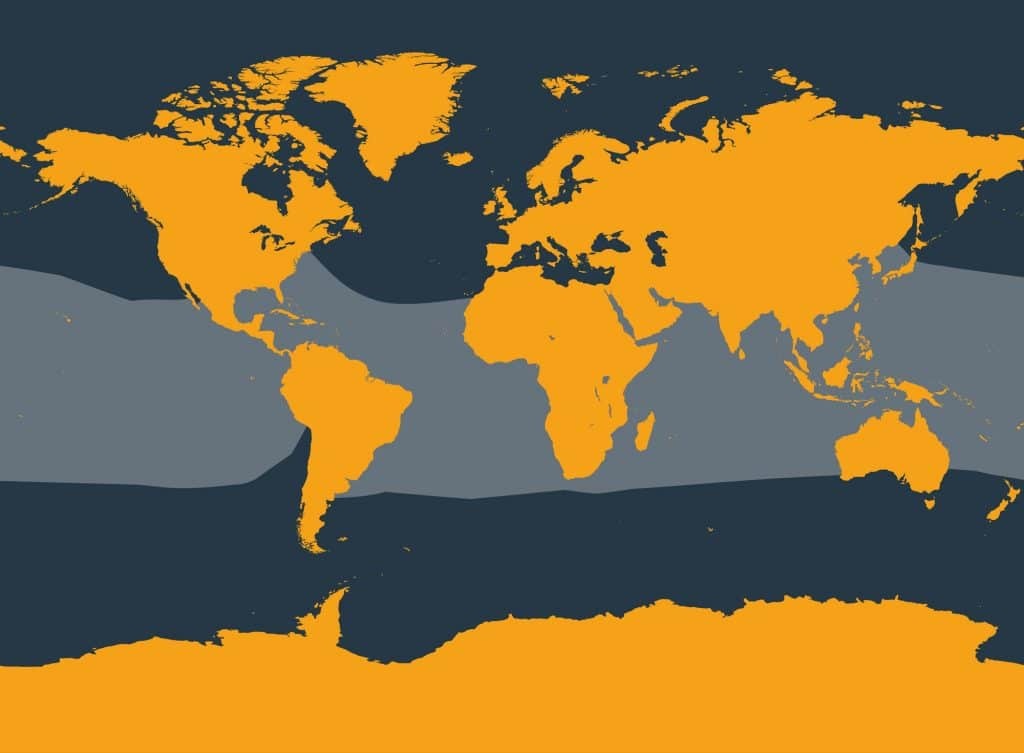
As their name suggests, pantropical spotted dolphins are found in a broad belt around the globe in tropical and subtropical waters, generally where sea surface temperatures exceed 25°C. They occur in the Atlantic, Pacific, and Indian Oceans, as well as the Red Sea and Persian Gulf. Most populations live in deep offshore waters, although they may also be seen near oceanic islands or coastlines where deep water lies close to shore.
Life of pantropical spotted dolphins?
Pantropical spotted dolphins are highly social and often form large, dynamic groups. Coastal groups usually contain fewer than 100 individuals, while offshore schools can number hundreds or even thousands of dolphins. They frequently associate with other dolphin species, such as spinner dolphins.
These dolphins are energetic swimmers and are known for acrobatic leaps, splashes, and surface displays. They are often attracted to boats and may ride bow waves, although some populations avoid vessels due to past negative interactions with fisheries. Feeding dives tend to be deeper at night, reflecting the vertical movements of their prey.
Females typically reach sexual maturity between 9 and 11 years, while males mature later, between 12 and 15 years. Pregnancy lasts around 11 months, and calves are usually born every two to four years.
What do pantropical spotted dolphins eat?
Their diet consists mainly of small schooling fish, as well as squid and crustaceans, depending on what is locally available. In some regions, such as parts of the Indian Ocean, flying fish form an important part of their diet. They are flexible feeders and adapt their hunting strategies to different marine environments.
Threats to pantropical spotted dolphins
Despite their wide distribution, pantropical spotted dolphins face several ongoing threats:
- Entanglement in fishing gear, particularly in large-scale tuna fisheries
- Bycatch in gillnets and other fishing operations
- Direct hunting in some regions for food
- Capture for captivity in a limited number of countries
In parts of the eastern tropical Pacific, populations were severely reduced by historical tuna fishing practices, and some groups have yet to fully recover.
Why their conservation matters
Pantropical spotted dolphins are an important component of open-ocean ecosystems and play a role in maintaining balanced marine food webs. Protecting this species also supports broader efforts to reduce harmful fishing practices and promote sustainable use of the world’s oceans.
Stripped Dolphin
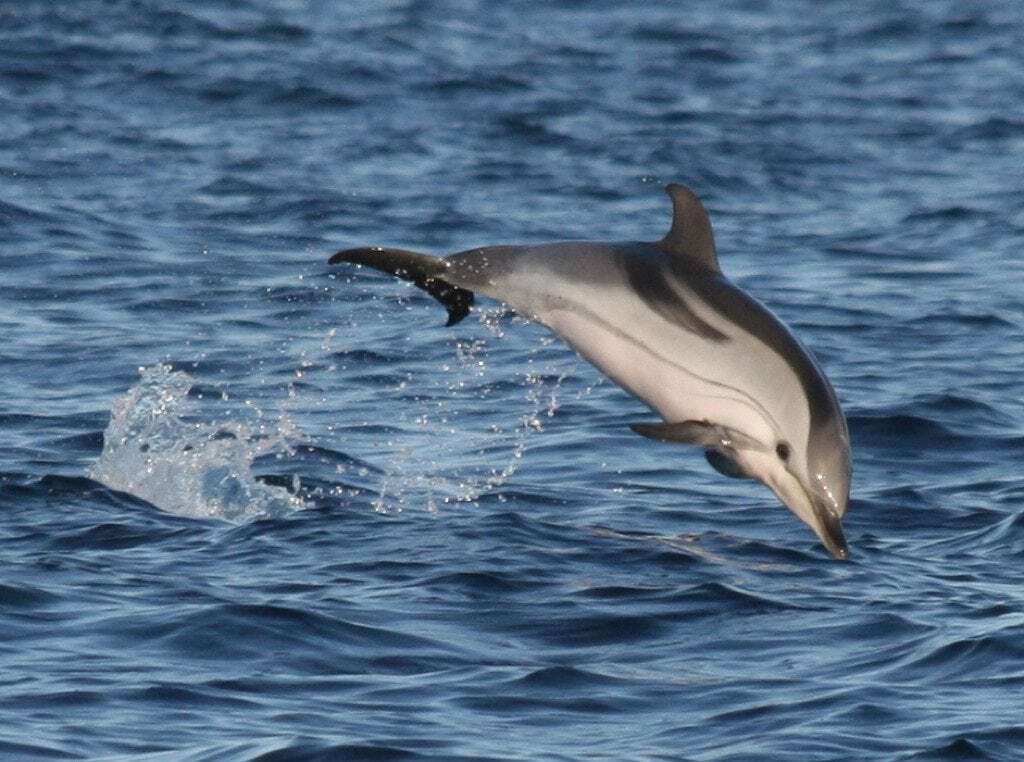
Striped Dolphin (Stenella coeruleoalba)
Striped dolphins are among the most energetic and wide-ranging dolphin species in the world’s oceans. They are known for forming large, fast-moving groups and for their spectacular surface activity, including high leaps and synchronized swimming. Their speed and agility make them one of the most visually striking oceanic dolphins.
Key facts
- Maximum length: up to 2.6 m
- Maximum weight: up to 160 kg
- Life expectancy: up to 60 years
- IUCN conservation status: Least Concern
What do striped dolphins look like?
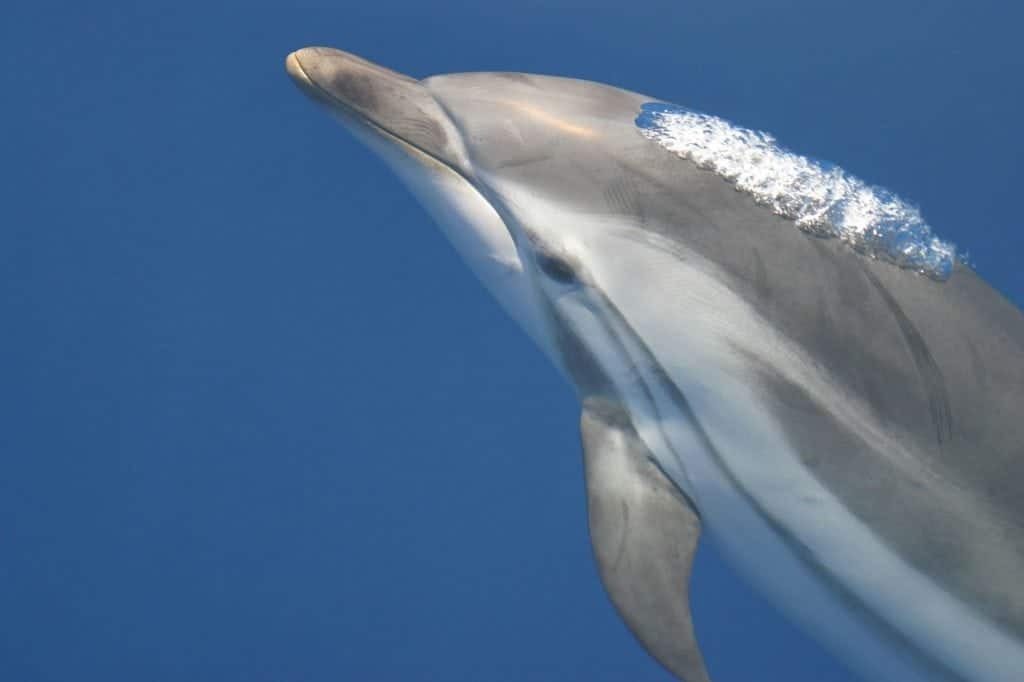
Striped dolphins are relatively small and slender with a streamlined body adapted for fast swimming. Their most distinctive feature is their bold colour pattern. A dark stripe runs from the beak, through the eye, along the side of the body and toward the underside near the tail. A second stripe extends from below the eye to the pectoral flipper. The back is typically dark grey to blue-grey, while the belly is lighter in colour.
Where do they live?
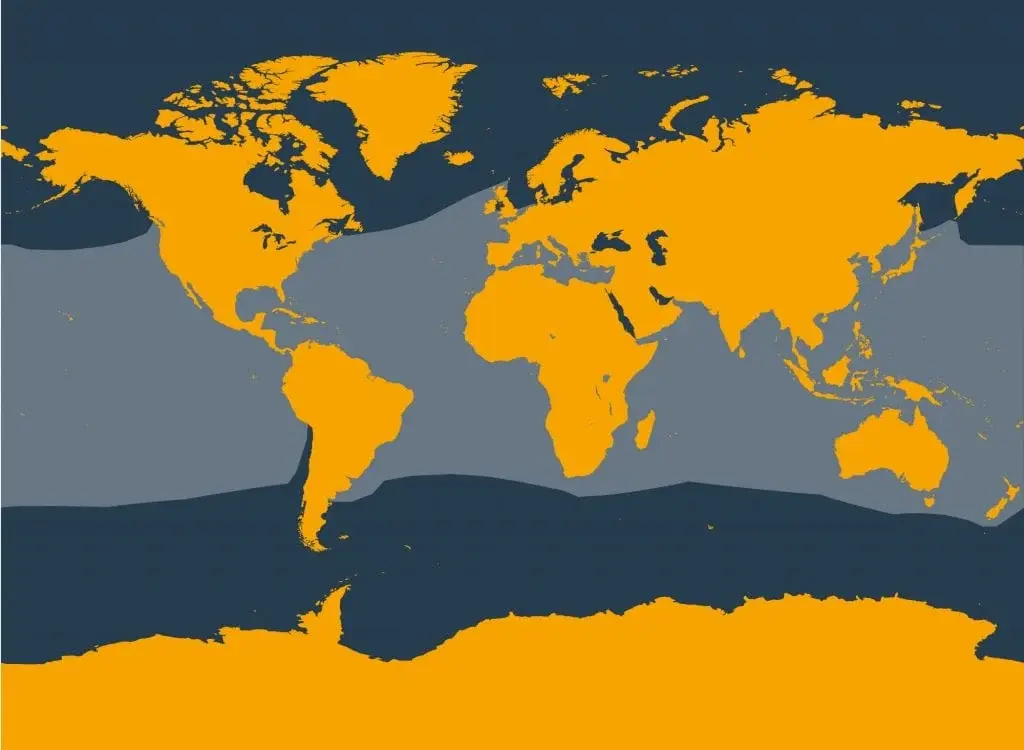
Striped dolphins are widely distributed throughout temperate and tropical oceans worldwide. They prefer deep offshore and oceanic waters, often occurring beyond the continental shelf. Although primarily pelagic, they may occasionally be seen closer to shore where deep water approaches the coastline.
What is life like for striped dolphins?
Striped dolphins are highly social and usually travel in large pods, sometimes numbering hundreds or even thousands of individuals. They are extremely active at the surface and frequently engage in acrobatic behaviours such as breaching, spinning, somersaulting, and leaping clear of the water. At high speed, large portions of a pod may surface simultaneously, creating dramatic displays.
Their social nature and curiosity often lead them to approach vessels, where they may bow-ride or play in the wake of boats.
What do striped dolphins eat?
Striped dolphins feed mainly on small schooling fish that live in mid-water or deeper layers of the ocean, including species such as lanternfish. Squid also form an important part of their diet. They often forage at depth, following the vertical movements of their prey.
Threats to striped dolphins
Although globally widespread, striped dolphins face several human-related threats:
- Direct hunting in certain regions
- Bycatch in fishing nets and gear
- Pollution, including plastics, oil spills, and chemical contaminants that accumulate in their bodies
These pressures can affect both individual health and long-term population stability.
Why their conservation matters
Striped dolphins play an important role in open-ocean ecosystems as active predators within marine food webs. Protecting them also supports broader efforts to reduce harmful fishing practices and improve ocean health across their wide range.
Spinner Dolphin
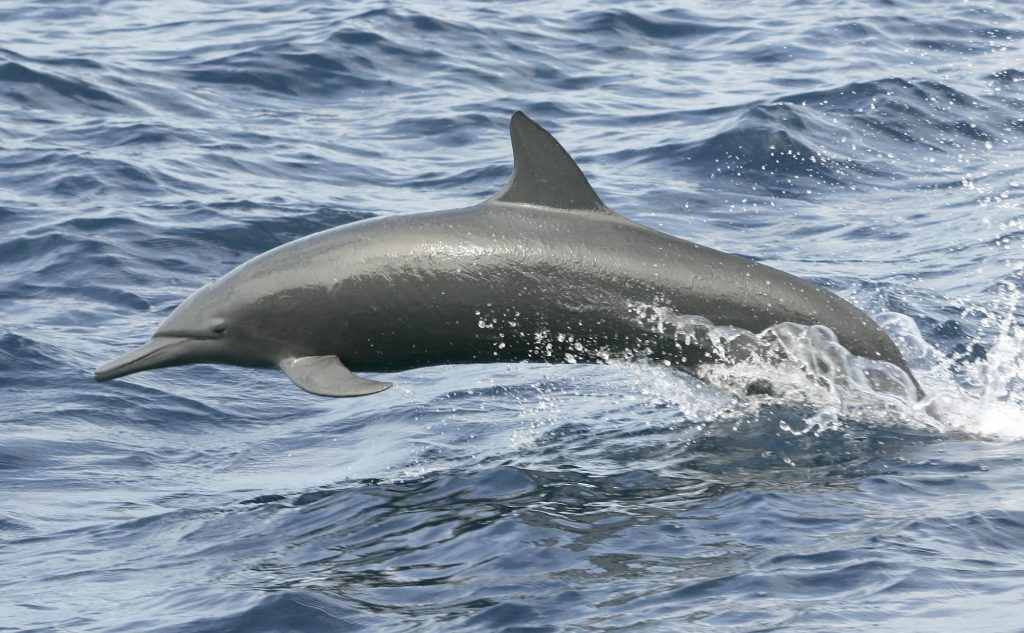
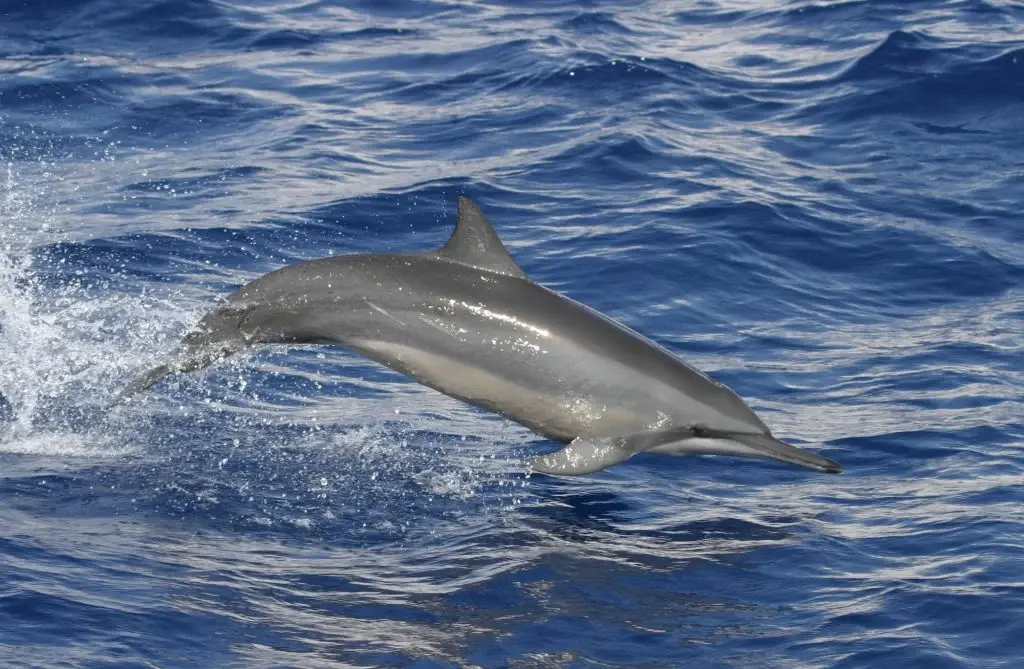
Spinner Dolphin (Stenella longirostris)
Spinner dolphins are famous for their spectacular aerial displays. They are the most accomplished spinning dolphins in the world, capable of leaping high above the sea surface and rotating multiple times along their body axis before splashing back into the water. These acrobatic performances make spinner dolphins a favorite species for dolphin watchers worldwide.
Key facts
- Maximum length: up to 2.35 m
- Maximum weight: up to 82 kg
- IUCN conservation status: Data Deficient (global)
What do spinner dolphins look like?
Spinner dolphins have slim, streamlined bodies built for speed and agility. All spinner dolphins share a long, narrow beak, pointed flippers, and a tall, triangular dorsal fin.
The most widespread subspecies, Gray’s spinner dolphin, has a distinctive three-tone color pattern: dark grey on the back, lighter grey along the sides, and a pale underside. Spinner dolphins in the Eastern Tropical Pacific tend to be darker overall. Large males in this region often develop an unusual forward-leaning dorsal fin.
Where do spinner dolphins live?
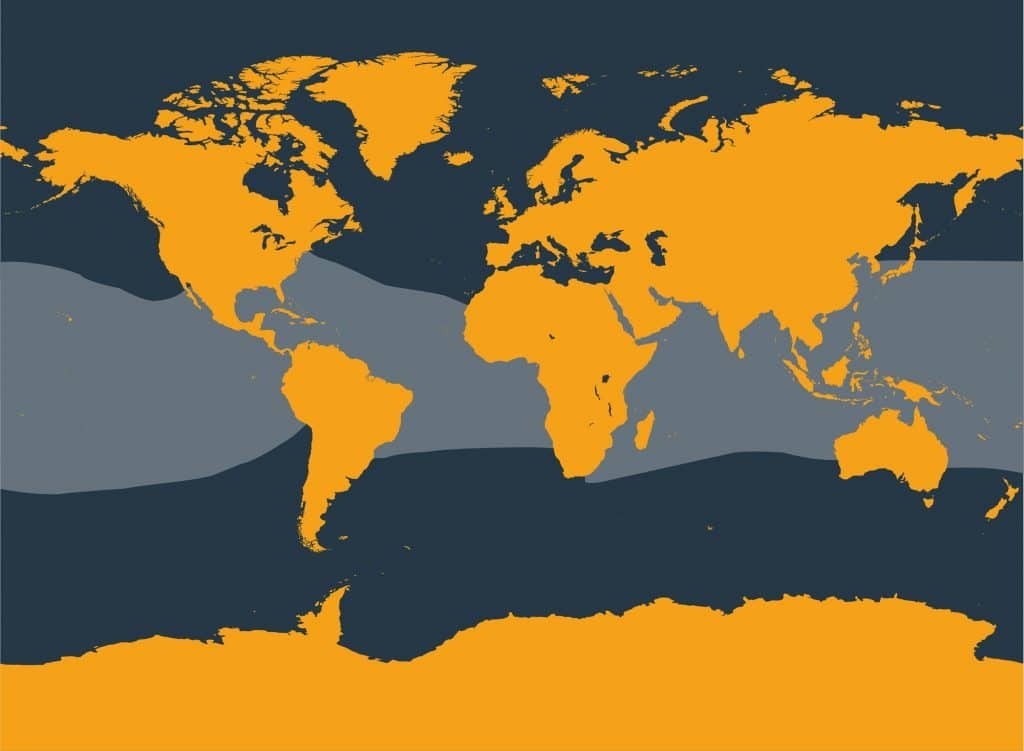
Spinner dolphins are found in tropical and subtropical waters across the Atlantic, Pacific, and Indian Oceans. Different subspecies occupy specific regions:
- Gray’s spinner dolphin: widespread globally
- Eastern spinner dolphin: Eastern Tropical Pacific, off Central and South America
- Central American spinner dolphin: narrow coastal zone of western Central America
- Dwarf spinner dolphin: Southeast Asia and northern Australia
A white-belly form, believed to be a hybrid, may soon be recognized as an additional subspecies.
What is life like for spinner dolphins?
Spinner dolphins follow a predictable daily routine. During daylight hours, they rest in shallow coastal waters, often forming large, tightly packed groups. At night, they travel offshore into deeper waters to feed.
Pods vary greatly in size, ranging from fewer than 50 individuals to gatherings of several thousand dolphins. Social structure differs between populations, with some forming stable long-term groups while others shift between pods.
What do spinner dolphins eat?
Spinner dolphins feed mainly on small fish, squid, and shrimp. Their prey migrates upward in the water column at night, allowing dolphins to hunt efficiently in mid-water depths under the cover of darkness.
Why do spinner dolphins spin?
The exact reason remains uncertain, but spinning likely serves multiple purposes:
- Physical conditioning: stretching muscles after resting
- Social communication: coordination, play, and display behavior
- Courtship: showing strength and agility
- Parasite removal: dislodging remoras and other hitchhikers
Spinning often triggers group participation, reinforcing its strong social and communicative role.
Threats to spinner dolphins
- Fishing activities: Accidental entanglement in gillnets, driftnets, and other fishing gear
- Hunting: In some regions, dolphins are taken deliberately for bait or food; in the Solomon Islands, spinner dolphins are hunted for their teeth
- Tourism pressure: Repeated disturbance from dolphin-watching and swim-with-dolphins operations can disrupt resting behavior and negatively affect health and reproduction
Spinner dolphin conservation matters
Spinner dolphins play an important role in healthy marine ecosystems. Protecting their resting habitats, reducing bycatch, and managing tourism responsibly are essential for ensuring stable populations across their range.
You can help protect spinner dolphins
By supporting marine conservation efforts, you help:
- Reduce bycatch and fishing-related deaths
- Protect resting and feeding habitats
- Promote healthy oceans for future generations
Together, we can ensure spinner dolphins continue to thrive in the wild.
Bryde’s Whale
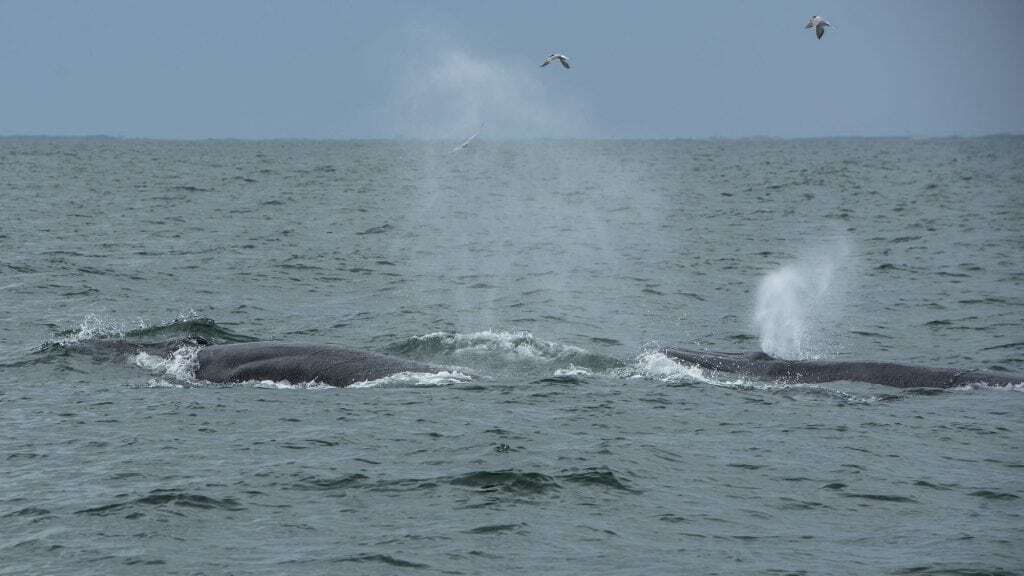
Bryde’s Whale
Overview
Bryde’s whales are large baleen whales that spend their entire lives in warm waters near the tropics and subtropics. Scientists aren’t entirely sure how many distinct forms or subspecies there are, but currently two are recognised: B. e. brydei (the offshore form) and B. e. edeni (sometimes called Eden’s whale). Whale and Dolphin Conservation
Names You Might Hear
People sometimes also call them Common Bryde’s whale, Pygmy Bryde’s whale, Tropical whale or Eden’s whale. Whale and Dolphin Conservation
Size & Status
They can grow up to about 15–16.5 m long and weigh as much as 40 t.
Conservation status: Least Concern according to IUCN. Whale and Dolphin Conservation
Appearance
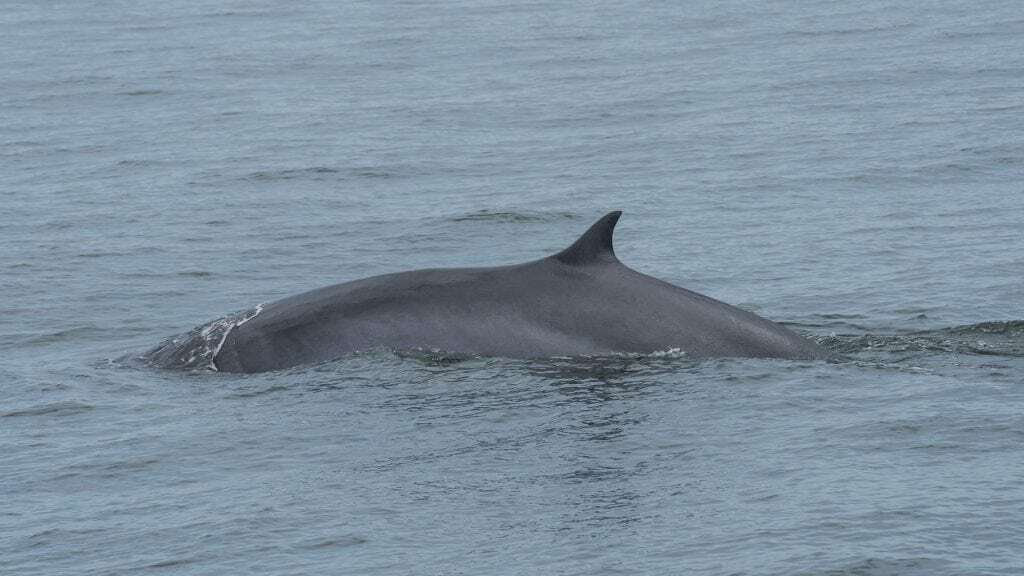
Bryde’s whales have long, slender bodies with a smoky blue-grey colour. They often have scars from parasites or small shark bites. They’re unusual among large whales because they have three ridges on the top of their head (most baleen whales have only one). They also have dozens of throat grooves and many coarse baleen plates that help them filter food. Whale and Dolphin Conservation
Behaviour & Lifestyle
These whales are often seen alone or in pairs, but they sometimes gather in larger groups when feeding.
They usually swim slowly but can reach speeds up to around 15 mph (24 km/h) if needed.
Bryde’s whales often stay near the surface of the water. Whale and Dolphin Conservation
Diet
Bryde’s whales feed by filtering water to catch tiny creatures like plankton, krill and copepods. They also eat small fish and crustaceans like shrimp and crabs. Whale and Dolphin Conservation
Habitat & Distribution
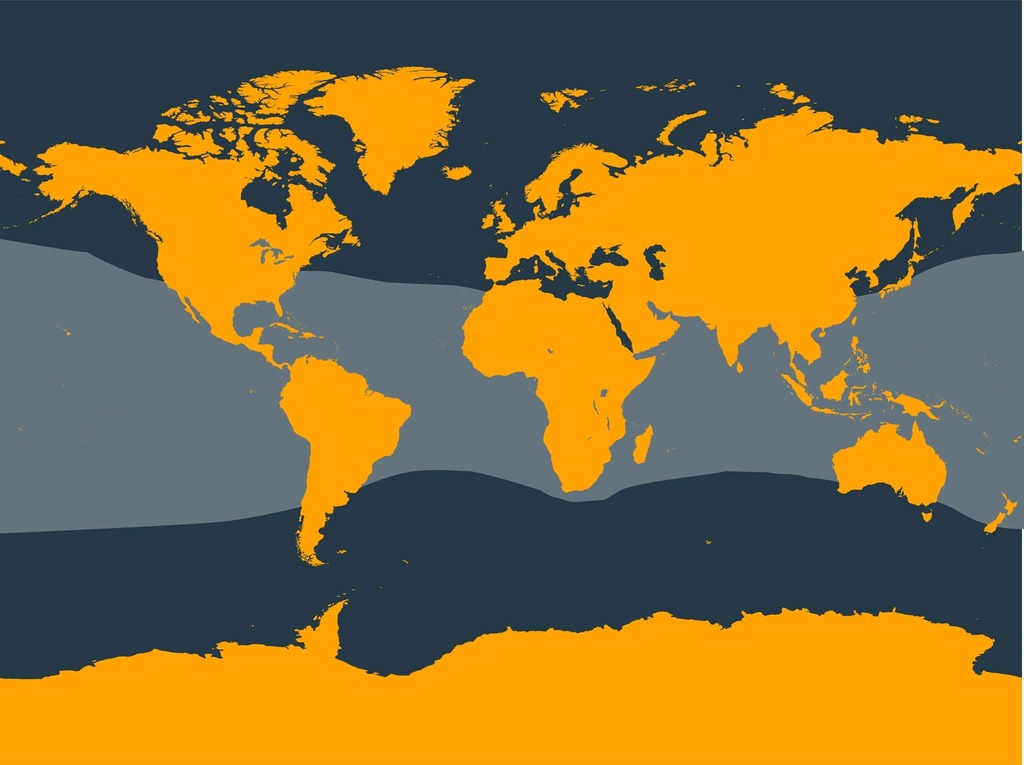
These whales are found in all the world’s oceans, but because they prefer warmer water (about 16 °C or above), they stick to tropical, subtropical, and warm temperate zones. Some groups stay in one area year-round, while others make seasonal movements. Whale and Dolphin Conservation
Name Origin
The name “Bryde’s whale” (pronounced “Broo-dess”) comes from Johan Bryde, a Norwegian businessman who helped establish the first whaling stations in Durban, South Africa, in the early 1900s. Whale and Dolphin Conservation
Threats They Face
Although officially classed as “Least Concern,” Bryde’s whales still face serious dangers, including:
Hunting in some countries,
Pollution from plastics, oil, and toxic chemicals,
Underwater noise from ships, drilling, and sonar that can disrupt their navigation and communication.
Pygmy Sperm Whale
Pygmy Sperm Whale(Kogia breviceps)
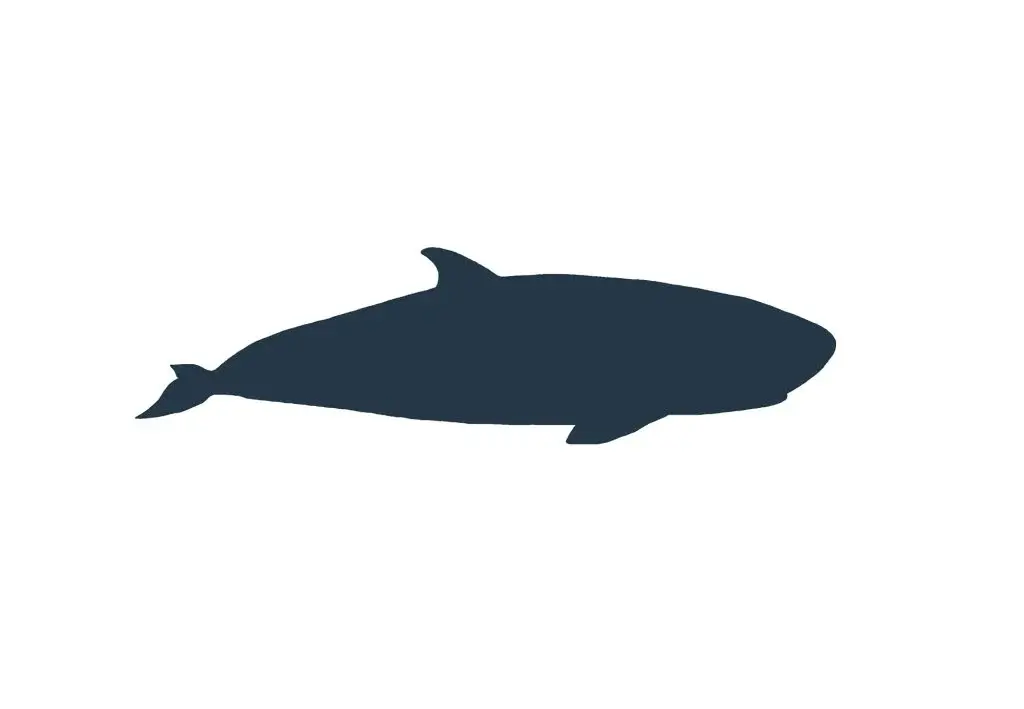
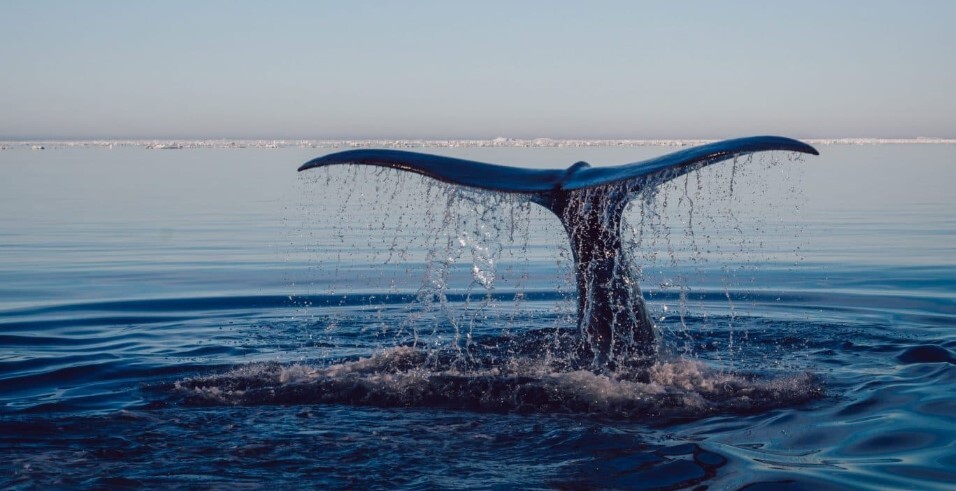
The pygmy sperm whale is a small, deep-water whale species recognized for its compact body and distinctive behavior. It was formally identified as a separate species in 1966 and shares some similarities with the dwarf sperm whale. One unique defensive strategy of pygmy sperm whales is ejecting a reddish-brown cloud of intestinal fluid to distract predators before diving.
Key facts
- Maximum length: up to 3.8 m
- Maximum weight: up to 450 kg
- IUCN conservation status: Data Deficient
What do pygmy sperm whales look like?
Pygmy sperm whales have robust, streamlined bodies with a square-shaped head. Their lower jaws contain 9–16 pairs of teeth, and the upper jaw may have up to three pairs. The single blowhole is slightly off-center on the head. Their coloration ranges from grey to blue-grey on the dorsal side, fading to white, pale pink, or pale blue on the belly. Distinctive white patches are present in front of the eyes, which are circled in black.
Where do they live?
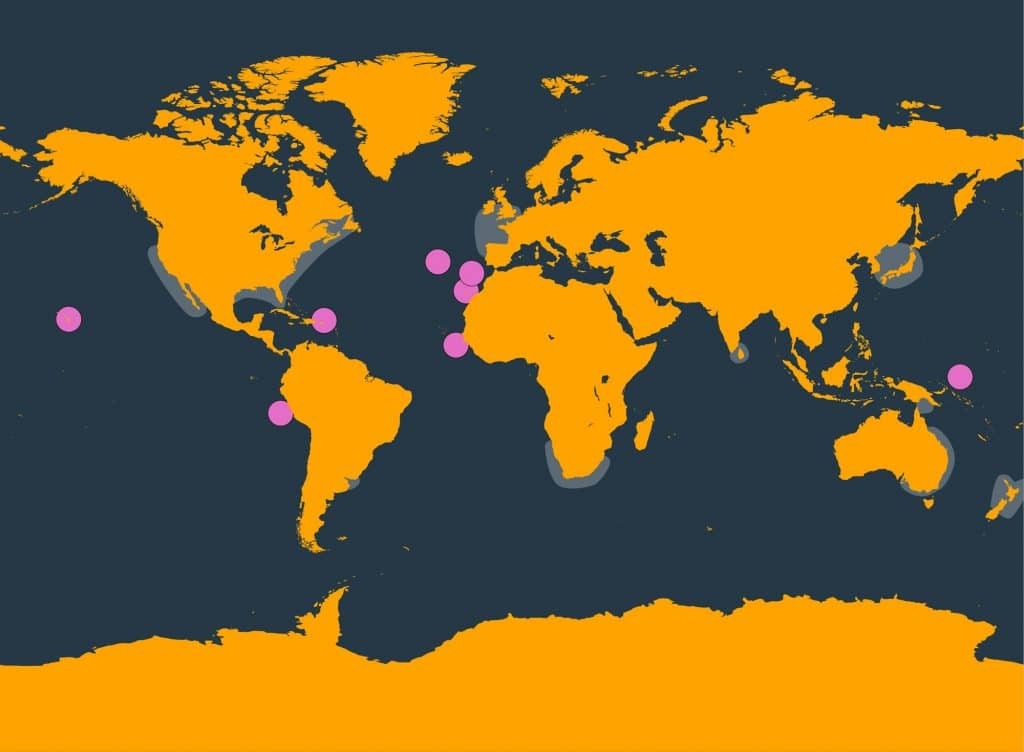
Pygmy sperm whales prefer warm, deep waters and are found in temperate, subtropical, and tropical seas worldwide. They are primarily pelagic, rarely approaching coastal areas, although small numbers may be affected by human activities near the shore.
What is life like for pygmy sperm whales?
These whales are generally solitary or form small groups of 6–7 individuals. They are relatively slow swimmers and often rest at the surface in a behavior known as logging, with their backs and heads visible while the tail hangs in the water. When ready to dive, they sink directly rather than rolling.
Pygmy sperm whales are not highly vocal, but they likely use echolocation clicks to navigate and locate prey. Most of what is known about their behavior and biology comes from stranded individuals.
What do pygmy sperm whales eat?
Pygmy sperm whales feed on a variety of fish, squid, crabs, and shrimp, adapting their diet to the prey available in their deep-water habitats.
Threats to pygmy sperm whales
- Pollution: Toxic chemicals, plastics, oil spills, and litter degrade their marine environment and affect their health.
- Fishing gear: Accidental entanglement in nets and lines can cause injury or death.
- Anthropogenic pressures: Environmental change, marine debris, and underwater noise may impact populations.
Although they are not directly targeted by commercial hunting, these factors can still pose significant risks due to their small size and deep-water habits.
Why their conservation matters
Pygmy sperm whales are an integral part of oceanic ecosystems, helping maintain balanced food webs. Protecting them contributes to the overall health of deep-sea environments, which support numerous marine species and fisheries.
Fin Whale
Fin Whale (Balaenoptera physalus)
Also known as: Finner, Razorback, Finback, Flathead, Herring whale; Conservation status: Vulnerable (IUCN)
Overview
Fin whales are truly remarkable creatures—big, fast, and elegant all at once. Often called the “greyhounds of the sea,” they are the second-largest mammals on Earth. These majestic whales can reach lengths of up to 27 meters and weigh as much as 120,000 kg, making them giants of the ocean.
Appearance
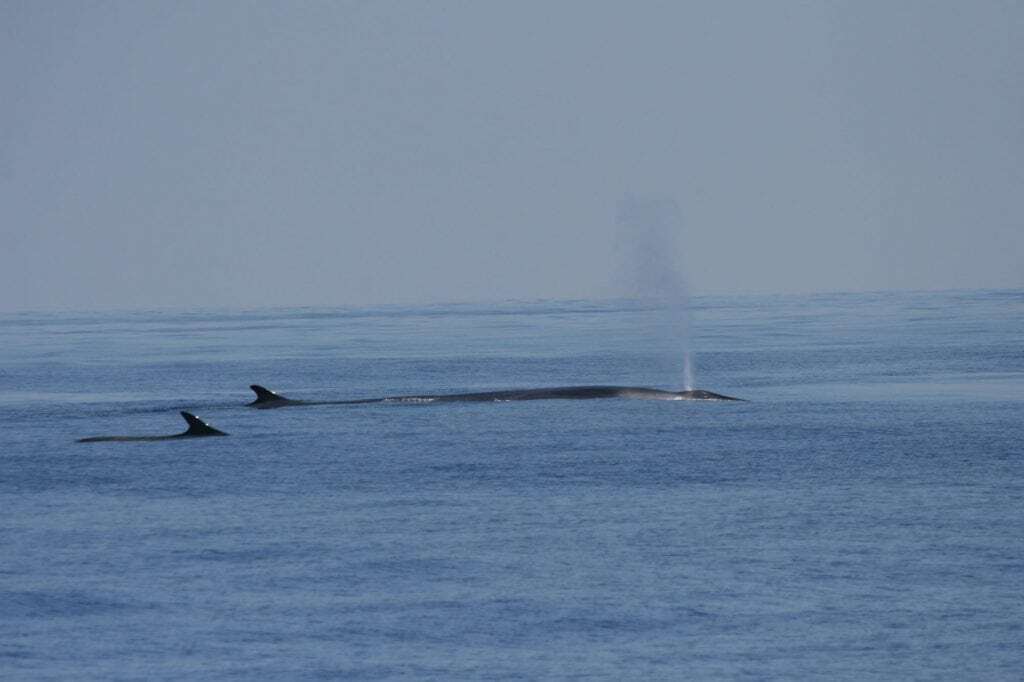
Fin whales have long, slender bodies with a distinct ridge behind their dorsal fin—earning them the nickname “razorbacks” in the U.S. Their color is mostly grey, dark brown, or black, with a pale belly. Interestingly, their lower jaw shows asymmetrical pigmentation: black on the left and brilliant white on the right, a rare feature shared only with Omura’s whale.
Like other baleen whales, fin whales have expandable pleats along their throat and belly that allow them to take in enormous amounts of water and food, sieving out water through baleen plates before swallowing. They can consume up to 2,000 kg of krill per day.
Behavior and Life
Fin whales are generally solitary or found in pairs. Calves stay with their mothers for about a year, learning essential survival skills. Unlike some other whales, fin whales are relatively shy, rarely breaching or spyhopping. Despite this, they have occasionally been observed mixing and even hybridizing with blue whales.
Life has been challenging for fin whales. Historically hunted for oil, meat, and baleen, their populations were drastically reduced, though their speed sometimes helped them escape early whalers. Today, threats from whaling persist, making conservation efforts critical.
Diet
Fin whales are filter feeders, primarily consuming krill, small fish, and crustaceans. To satisfy their massive appetites, they can gulp up to 70 cubic meters of water at a time, consuming several tons of prey each day.
Habitat and Distribution
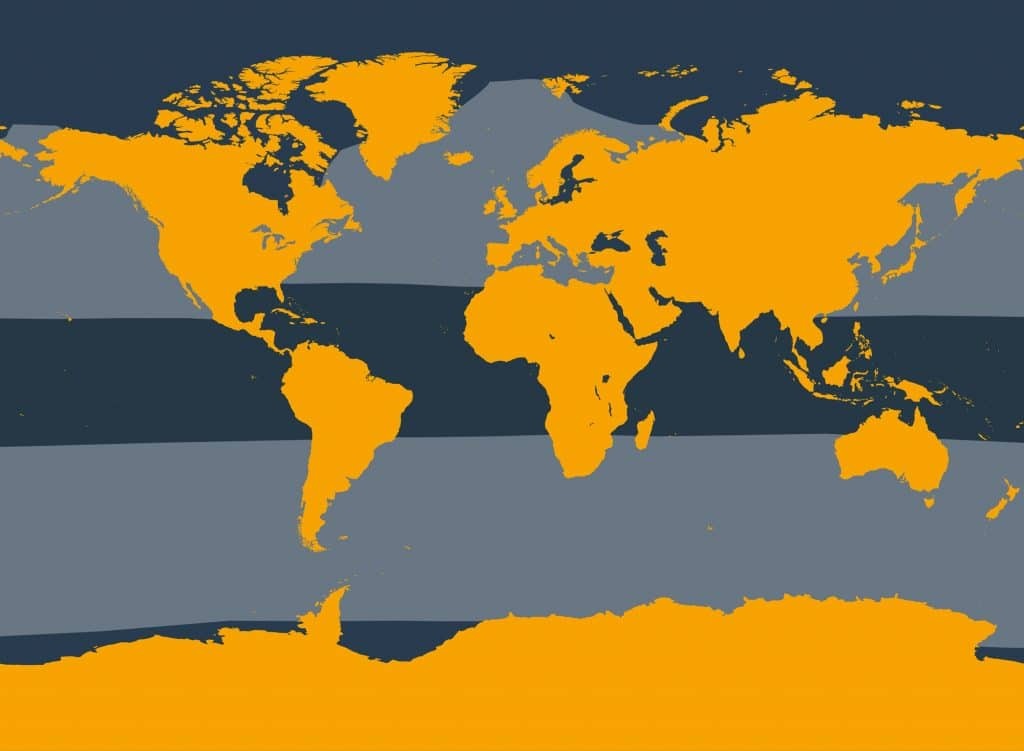
Fin whales are cosmopolitan, found in oceans worldwide. They prefer deep, cooler waters but migrate seasonally between feeding and breeding grounds. Some populations are resident, such as those in the Gulf of California and the Mediterranean Sea.
Lifespan
Fin whales can live for over 100 years. One whale found in Antarctica was estimated to be 111 years old.
Fun Facts
Maximum speed: up to 45 km/h
Estimated global population: fewer than 100,000
Calves are around 6.5 m at birth
Males grow up to 25 m, females 27 m, weighing up to 120,000 kg
Blue Whale
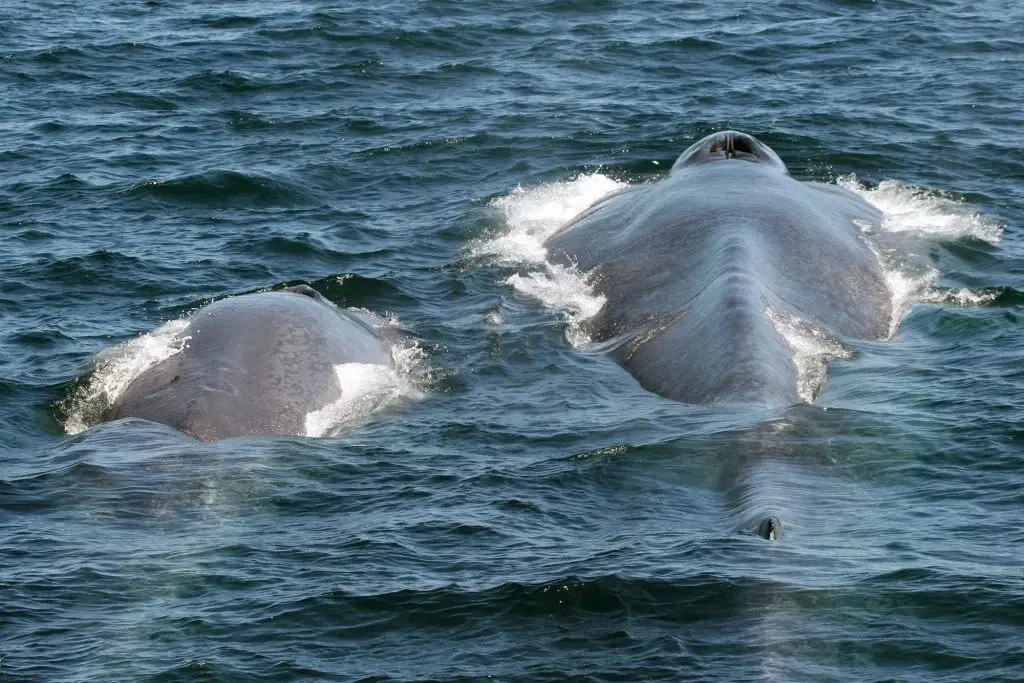
Blue Whale (Balaenoptera musculus)
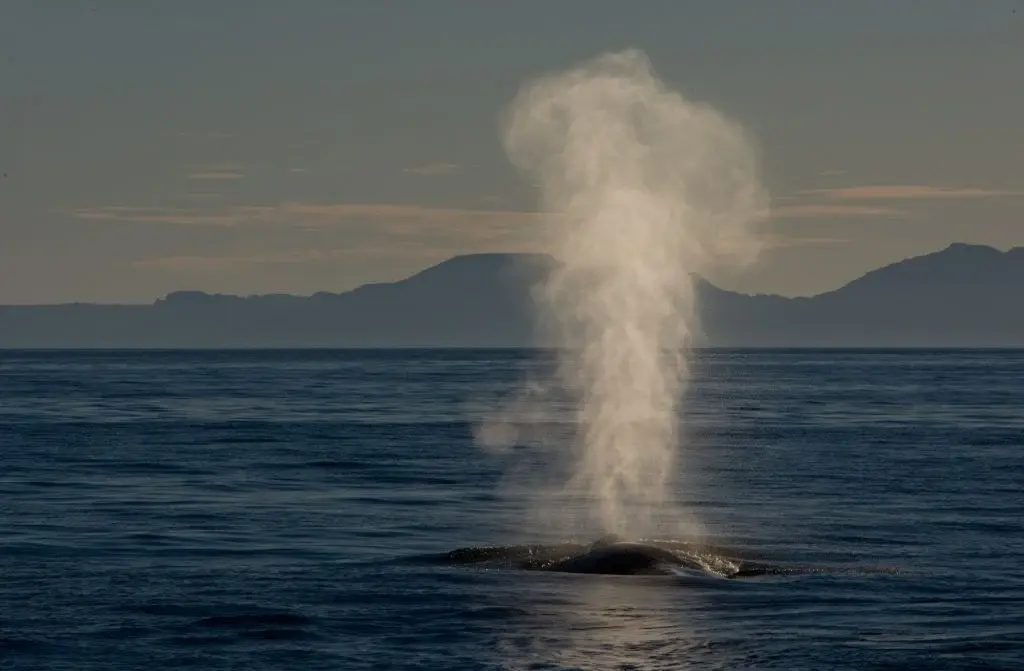
The blue whale is the largest animal ever known to have lived on Earth. Longer, heavier, and louder than any other living creature, it represents the extraordinary scale and beauty of life in the ocean. As an icon of marine conservation, the survival of the blue whale reflects humanity’s ability—or failure—to protect the natural world.
IUCN conservation status: Endangered
The Antarctic blue whale (Balaenoptera musculus intermedia) is classified as Critically Endangered.
Key facts
- Maximum length: up to 33 m
- Maximum weight: up to 190,000 kg
- Life expectancy: up to 90 years
- Estimated global population: 10,000–25,000 individuals
What do blue whales look like?
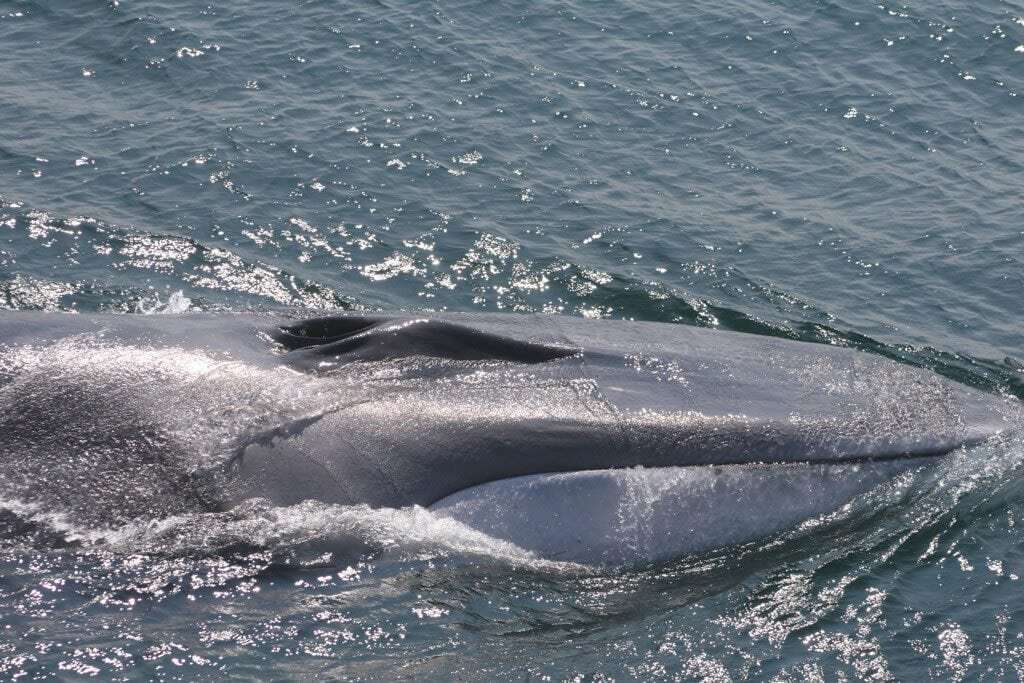
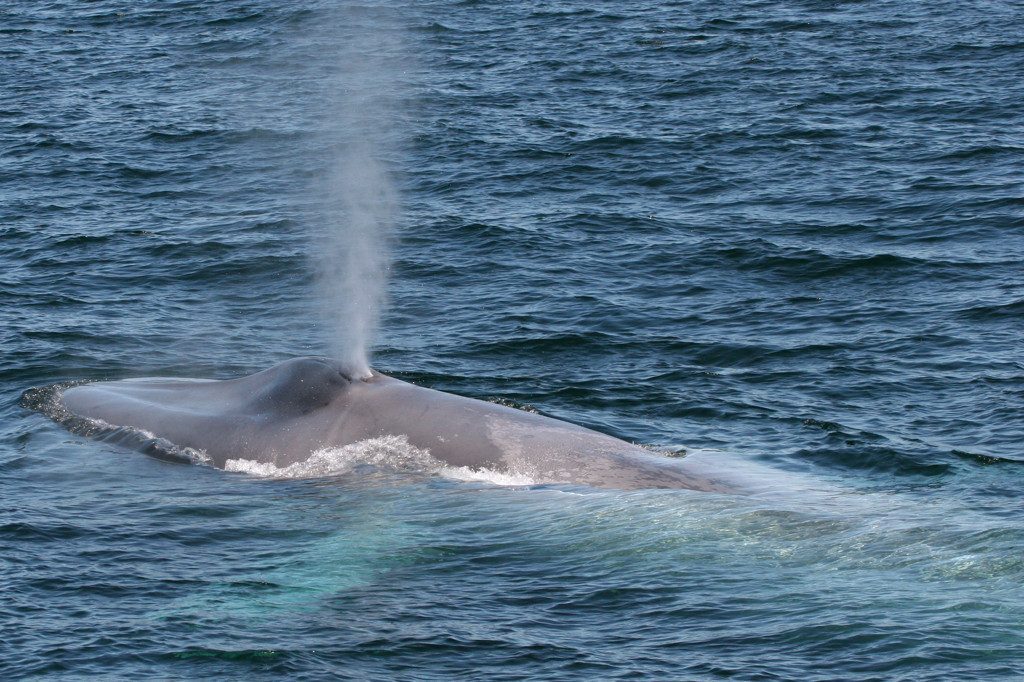
Blue whales have long, streamlined bodies with broad, flat heads and a distinctive U-shaped ridge. Their skin appears blue-grey, often mottled with lighter patches, while the underside is paler in colour. Despite their enormous size, blue whales move smoothly and quietly through the water, giving them a surprisingly graceful appearance.
Newborn calves are already immense, measuring around seven metres in length and weighing several tonnes. Adults can grow longer than two large buses placed end to end, making every encounter with a blue whale an unforgettable experience.
What is life like for a blue whale?
Blue whales are long-lived animals, with many individuals reaching 80–90 years of age. Females give birth approximately every two to three years after a pregnancy lasting around 12 months. Calves remain close to their mothers for several months, nursing on rich milk and growing rapidly before being weaned.
These whales are highly migratory, moving seasonally between cold, food-rich waters where they feed and warmer regions where breeding and calving take place. During migration, they eat very little and rely heavily on energy stored in their thick blubber layers.
Blue whales communicate using powerful, low-frequency sounds that can travel hundreds of kilometres through the ocean. Some of these calls can reach volumes of around 188 decibels, making them among the loudest animals on the planet.
What do blue whales eat?
Despite being the largest animals on Earth, blue whales feed almost exclusively on krill, tiny shrimp-like crustaceans found in dense swarms. Using baleen plates instead of teeth, they take in huge mouthfuls of seawater and filter out the krill before expelling the water.
During peak feeding periods, a single blue whale can consume tens of millions of krill in one day, converting small prey into the energy needed to support their massive bodies.
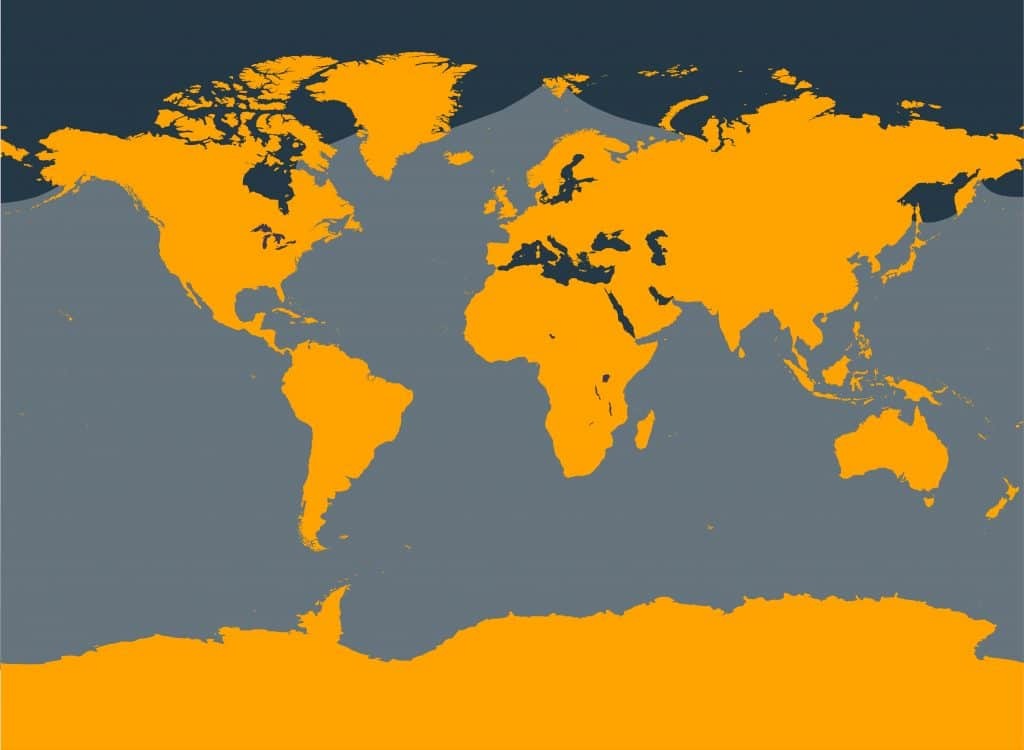
Where do blue whales live?
Blue whales inhabit deep ocean waters across the globe, occurring in both hemispheres. They are most commonly found far offshore and are rarely seen close to land.
Populations are found in:
- The North Pacific, including waters from Alaska to Central America
- The North Atlantic, particularly near Greenland, eastern Canada, and the North Atlantic basin
- The Southern Hemisphere, including the Antarctic region and parts of the Indian Ocean
Once numbering in the hundreds of thousands, blue whales were driven to the brink of extinction by commercial whaling. Although protected today, their populations are recovering very slowly.
Major threats to blue whales
Although commercial whaling has largely ended, blue whales continue to face serious human-related threats:
- Vessel strikes, as busy shipping lanes overlap with whale habitat
- Entanglement in fishing gear, including nets and lines
- Noise pollution from shipping, sonar, and offshore exploration, which disrupts communication and navigation
- Chemical pollution, plastics, and oil contamination that affect health and reproduction
- Irresponsible whale-watching, where vessels approach too closely and interfere with natural behaviour
Why blue whales need protection
Blue whales play an important role in maintaining healthy ocean ecosystems. Their recovery is slow, and even small increases in mortality can have long-term impacts on populations. Protecting blue whales also helps safeguard vast marine habitats and countless other species that depend on them.
Help us carry on our Programs