
CETACEAN MONITORING & CONSERVATION
The Bay of Bengal, with its vast and dynamic waters stretching from the Sundarbans to Teknaf and beyond, is home to some of the world’s most captivating marine mammals. Dolphins, porpoises, and whales—collectively known as cetaceans—have long inhabited these shifting currents, estuaries, and channels. Their presence signals the ecological health of Bangladesh’s marine environment. They are apex predators, ecosystem regulators, indicators of oceanic productivity, and cultural icons. Yet despite their ecological importance, cetaceans in Bangladesh face escalating threats, from widespread fishing gear entanglement and maritime traffic to pollution, habitat degradation, and the rapid industrialization of coastal zones. MarineLife Alliance (MLA) has been at the forefront of documenting, understanding, and responding to these challenges. Between 2019 and 2022, MLA recorded forty-three dead small cetaceans, two baleen whales, and twelve live cetaceans during in-water surveys along the Bangladesh coast. These records form one of the most comprehensive datasets generated by any NGO in the country, highlighting both the richness of the marine environment and the urgency of conservation action.
Cetacean diversity in Bangladesh is shaped by the unique convergence of freshwater, estuarine, and marine ecosystems. The nation’s coastline and adjacent river systems host species such as the Irrawaddy dolphin, Indo-Pacific humpback dolphin, Indo-Pacific finless porpoise, and the Ganges River dolphin, along with marine species like spinner dolphins, common dolphins, and bottlenose dolphins. Large migratory whales, especially Bryde’s whales and occasionally blue whales, traverse deeper waters further offshore. During MLA’s monitoring period, two baleen whales washed ashore in 2021—rare but significant events that reflect the presence of large cetaceans in the region. While these species occupy different ecological niches, their challenges are intertwined. Fishing nets impede dolphins and porpoises along nearshore corridors; deep-sea shipping lanes pose collision risks for whales; and industrial activity in estuarine systems threatens both freshwater and marine dolphins alike.
MLA’s monitoring network covers nearly two hundred kilometers of coastline in southeastern and south-central Bangladesh. Conservation Assistants stationed in Teknaf, Cox’s Bazar, Sonadia, Dhalghata–Matarbari, and St. Martin’s Island regularly patrol beaches during early morning hours, conduct opportunistic in-water surveys, and respond to stranding reports from fishing communities. This model integrates science with community-driven action, creating a rapid detection system for cetacean mortality. Through these combined efforts, MLA documented forty-three dead cetaceans washed ashore or found floating near key fishing zones. These included Indo-Pacific humpback dolphins, finless porpoises, bottlenose dolphins, Irrawaddy dolphins, and unidentified small dolphins in advanced decomposition. In most cases, signs of entanglement were visible. Deep cuts along the flippers, tail, or rostrum—along with rope marks and net abrasions—indicated that shrimp trawlers, gillnets, and marine set bag nets were responsible for many of the deaths. Some carcasses bore injuries consistent with vessel strikes: fractured skulls, blunt-force trauma, or long lacerations from propeller blades. The presence of both entanglement and strike injuries underscores the dual pressures of fishing and maritime traffic along Bangladesh’s coast.
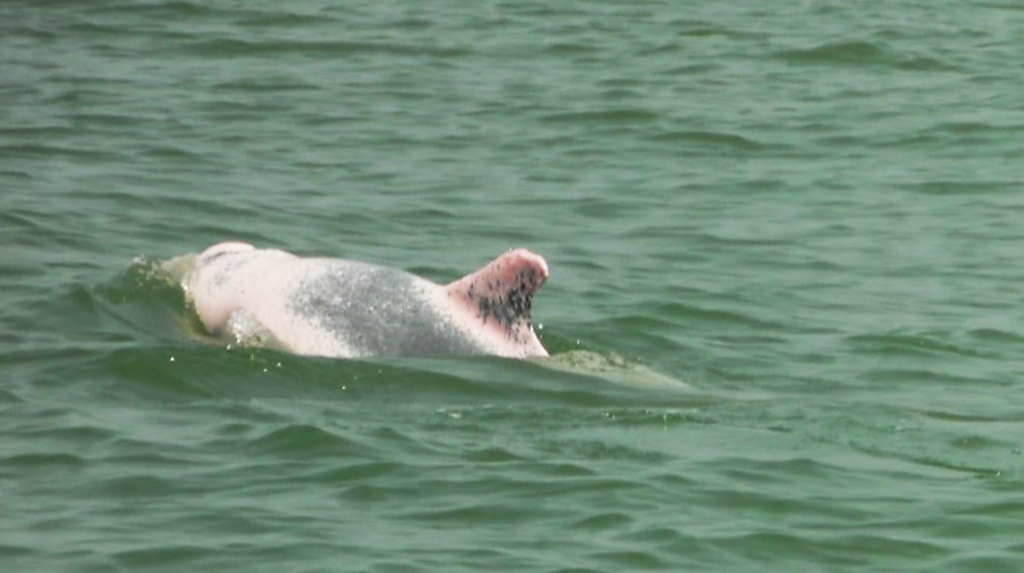
During in-water surveys conducted alongside other marine conservation activities, MLA recorded twelve live cetaceans. These sightings, though fewer in number than strandings, provide valuable insights into habitat use, species distribution, and the relative abundance of surviving populations. Irrawaddy dolphins were often observed in the Naf River estuary and Teknaf Channel, where the mix of freshwater and saline water creates ideal conditions for this species. Indo-Pacific humpback dolphins were sighted regularly near Moheshkhali Channel and Sonadia, sometimes seen feeding in small groups along shallow sandbars. Spinner dolphins were recorded near the southern part of St. Martin’s Island, often in deeper waters. Although these sightings offer hope, the relatively low number compared to reported mortalities indicates that cetacean populations may be under severe pressure and possibly declining.
MLA’s monitoring methods relied on a blend of boat-based transect surveys, opportunistic sightings, beach patrols, interviews with fishers, and detailed stranding documentation. Whenever a dead cetacean was reported, the field team attempted to reach the site as quickly as possible to prevent loss of data due to scavenging or advanced decomposition. At each site, the team recorded GPS coordinates, species identification if possible, total body length, sex, external injuries, decomposition state, environmental conditions, and probable cause of death. Photographs were taken from multiple angles to aid identification and maintain an archive of all cases. Interviews with local fishers provided contextual information about recent fishing activity, net deployment, unusual sightings, or signs of distress among marine mammals prior to the stranding. In some instances, the team documented multiple dolphin deaths in close proximity, suggesting localized threats such as intensive gillnet operations or underwater noise from industrial activity.
Through this work, MLA has identified several hotspots of cetacean presence and mortality. The Teknaf Channel appears to be one of the most important zones for dolphins, given the regular sightings of Irrawaddy and humpback dolphins and the numerous carcasses recorded. This area, shaped by the confluence of riverine and marine waters, provides rich feeding grounds but is also heavily fished by gillnet boats and MSBN operators. The Sonadia Island lagoon and nearby sandbar systems form another critical zone. These shallow, biodiverse waters are home to coastal dolphin species that forage in groups. However, increasing sedimentation from the Matarbari coal and port development, along with illegal fishing activities, threatens this fragile habitat. The waters surrounding St. Martin’s Island, particularly the deeper offshore areas to the south and west, appear to be important for spinner dolphins and migratory whale species. The discovery of two baleen whale carcasses in 2021 suggests that shipping lanes or underwater noise may be affecting whales migrating through the corridor. Meanwhile, the Matarbari–Dhalghata marine corridor has emerged as a high-risk zone for cetaceans, as the rapid expansion of heavy industry has intensified dredging, marine traffic, and noise pollution.
Fishing gear entanglement remains the single greatest threat to cetaceans in Bangladesh. Thousands of small-scale and large-scale fishing vessels operate along the coast, placing nets directly in cetacean movement pathways. MLA’s inspections of carcasses revealed that many dolphins died after prolonged struggle in nets, suffocating underwater before fishers discovered them. The marks left on their bodies often show the tightening of nets around the rostrum, dorsal fin, or tail fluke. In some cases, dolphins appear to have been cut from the nets by fishers trying to salvage their gear. Although some fishers attempt to release trapped dolphins, many lack the training or the time to perform safe rescues, especially during periods of high fishing activity. Shrimp trawlers cause additional damage due to their sweeping nets and lack of turtle excluder devices. Their operations disturb seafloor habitats while unintentionally trapping dolphins and porpoises.
Vessel traffic and industrial development pose equally concerning risks. Bangladesh’s coastal waters are now host to rapidly growing maritime infrastructure, including LNG terminals, deep seaports, and expanded shipping activities. Vessel strikes are becoming more frequent, especially for slower-moving species such as baleen whales. High-speed tourist boats, particularly in the St. Martin’s Island corridor, produce significant underwater noise, disrupt dolphin communication, and increase collision risk. Dredging activities for port development create thick sediment plumes that impair visibility and affect prey availability for dolphins, while industrial discharges and plastic pollution degrade the quality of coastal waters.
One of the strengths of MLA’s approach lies in its deep engagement with fishing communities. Training sessions held between 2019 and 2022 involved hundreds of fishers across Teknaf, Moheshkhali, Cox’s Bazar, and Sonadia. These sessions introduced safe-release methods for entangled turtles and dolphins, explained the ecological importance of cetaceans, and offered practical guidance on how fishers can reduce accidental harm. Fishers frequently reported their own sightings, strandings, and rescues, making the monitoring network more effective. When MLA trained fishers as partners in conservation, they began identifying entanglement cases sooner and developed a sense of custodianship over the marine environment. This collaborative approach ensures that conservation is not imposed from outside but built from within the coastal communities who depend most on the ocean.
Stranding response has become one of MLA’s most consistent contributions to the field of marine mammal conservation in Bangladesh. The documentation of forty-three dead cetaceans and two whales not only reveals the scale of mortality but also provides insight into spatial and temporal trends that can guide future management. The twelve live cetaceans recorded during in-water surveys offer points of optimism, demonstrating that viable populations still remain within these waters. However, the juxtaposition of high mortality and limited sightings suggests that without intervention, cetacean populations may continue to decline.
The challenges facing cetaceans in Bangladesh are significant. Intense nearshore fishing pressure, unregulated maritime traffic, industrial dredging, underwater noise, pollution, and lack of formal marine protected areas all threaten their survival. Bangladesh has yet to establish any dedicated marine sanctuary specifically for cetaceans, leaving their habitats vulnerable to exploitation. Despite this, MLA’s monitoring efforts offer a strong foundation for future conservation. By identifying hotspots, recognizing major threats, and building local capacity, MLA is shaping a framework for long-term marine mammal protection.
Looking forward, the organization envisions establishing marine protected corridors in Teknaf Channel, Sonadia–Matarbari, and the offshore waters of St. Martin’s Island where dolphins and whales can travel, feed, and socialize with minimal disturbance. A dedicated cetacean research unit could monitor populations through monthly surveys, acoustic monitoring, and prey mapping. MLA also aims to expand its community-based network, recruiting fishers as dolphin responders and strengthening safe-release training. Bycatch mitigation will be central to future work, including improvements to fishing net design and the enforcement of vessel-speed regulations. In the long term, the organization aspires to develop a marine mammal rescue and response center equipped with rehabilitation tanks and necropsy facilities.
Despite the many challenges, the marine mammals of Bangladesh continue to display resilience. The dolphins of Teknaf, the porpoises of Sonadia, and the whales passing offshore remind us of the ecological richness that still thrives in the Bay of Bengal. With sustained effort, scientific commitment, and community cooperation, Bangladesh can protect its remaining cetacean populations and elevate the nation’s role in marine conservation. MarineLife Alliance’s work marks the beginning of a new chapter, one where the silent guardians of the sea—the dolphins and whales—are finally seen, understood, and protected.